A war crime is a serious violation of international humanitarian law for which a person is personally responsible: the individual who carried it out and the one who gave the order, not only the state whose army it is.
This article has three parts: what exactly counts as such a crime and what does not, how the concept came about, and which crimes by the Russian army in Ukraine had been documented by November 2026.
Key facts
- Definition: a serious violation of the laws and customs of war that entails individual criminal responsibility. The list of acts is in Article 8 of the Rome Statute
- When it applies: only during an armed conflict, international or internal
- Statute of limitations: for crimes within the jurisdiction of the International Criminal Court, there is none (Article 29)
- Where they are tried: national courts, the International Criminal Court, special tribunals
- Ukraine, registration: 221,929 registered offences classified as war crimes as of 16 April 2026, according to the Prosecutor General’s Office
- Ukraine, verdicts: 208 people convicted as of November 2025, 19 of them in person
- International Criminal Court: six arrest warrants in the situation in Ukraine, including for Vladimir Putin and Sergei Shoigu
What counts as a war crime
The ICRC derives the concept from two conditions: the violation must be serious and must entail individual criminal responsibility. An act is serious if it endangers protected persons or objects or breaches important values. That is why the list includes not only killings but also, for example, abusing dead bodies.
The Rome Statute lists such acts one by one. These are the ones most often at issue in this archive:
- wilful killing (Art. 8(2)(a)(i));
- torture or inhuman treatment (Art. 8(2)(a)(ii));
- unlawful deportation or transfer (Art. 8(2)(a)(vii));
- intentional attacks on the civilian population (Art. 8(2)(b)(i));
- intentional attacks on civilian objects (Art. 8(2)(b)(ii));
- an attack launched in the knowledge that it will cause excessive civilian losses (Art. 8(2)(b)(iv));
- killing or wounding a combatant who has surrendered or laid down his arms (Art. 8(2)(b)(vi));
- intentional attacks on hospitals, schools, places of worship and monuments, if they are not military objectives (Art. 8(2)(b)(ix));
- rape and other sexual violence.
Scale is not required for the offence. The Court has jurisdiction “in particular” when a crime is committed as part of a plan, a policy or on a large scale (Art. 8(1)), but even a single killing of a prisoner remains a war crime. This is what sets it apart from crimes against humanity.
Who is responsible
A perpetrator answers for what they did themselves. Under Article 28 a superior also answers for subordinates under their effective control. A military commander is liable if they knew or, owing to the circumstances, should have known of the crimes. For a civilian superior the test is stricter: they knew of the crimes or consciously disregarded information that clearly indicated them, and the crimes concerned activities within their responsibility. In both cases they failed to take all necessary and reasonable measures to prevent or repress the crimes or to submit the matter for investigation.
Under Article 8 of the Nuremberg Charter, acting on orders did not free a person from responsibility and could only mitigate punishment. The Rome Statute (Art. 33) leaves a narrow exception: the person was obliged to obey, did not know the order was unlawful, and the order was not manifestly unlawful. Orders to commit genocide or crimes against humanity are always manifestly unlawful under the Statute.
Not every civilian death is a war crime
Most disputes about strikes turn on this line.
War does not prohibit attacking military objectives. Additional Protocol I defines them as objects which by their nature, location, purpose or use make an effective contribution to military action and whose destruction, in the circumstances ruling at the time, offers a definite military advantage. In case of doubt, an object normally dedicated to civilian purposes is presumed to be civilian.
The death of civilians in a strike on a lawful target is not in itself a crime. An attack becomes criminal when the expected losses are excessive compared with the concrete military advantage. The Rome Statute sets the bar higher still: the losses must be “clearly excessive”, and the attacker must have acted with that knowledge.
There is also a third rule: precautions in attack. Those who plan or decide upon an attack must do everything feasible to verify that the target is military and choose means and methods that avoid, or at least minimise, civilian losses. An attack is cancelled or suspended if it becomes clear that the target is not military or that the losses would be excessive. Advance warning is given of an attack that may affect civilians, unless circumstances do not permit. The ICRC regards this as a rule of customary law for all conflicts. Article 8 of the Rome Statute contains no separate offence for breaching these duties.
This is why cases differ in difficulty. A shooting of a detainee in the street is proved by the fact and the identity of the shooter. With a missile strike, one has to establish what the target was, what those planning the strike knew about it and what they expected. The question is examined in detail in the case of the strike on the Mykolaiv Regional Administration, where there really were military personnel in the building.
How to read the wording
In reporting on this war, the single word “crime” can stand for documents of very different weight.
| Who is speaking | What it is | What it means |
|---|---|---|
| Human rights organisation | Investigation, conclusion about “characteristics of a war crime” | An assessment that can be checked. Not an accusation |
| UN Commission of Inquiry | Finding under the “reasonable grounds to believe” standard | The finding of an investigative body. Not a court decision |
| Investigator, prosecutor | Notice of suspicion, indictment | The prosecution’s version. The person is presumed innocent |
| ICC judges, arrest warrant | ”Reasonable grounds to believe” that a person bears responsibility | Judges found the grounds sufficient for arrest. Not a verdict |
| Court, verdict | At the ICC, proof beyond reasonable doubt is required (Art. 66) | Guilt established by a court |
Where this article says “the UN Commission concluded”, it means exactly that, not a verdict.
How it differs from other international crimes
| Crime | Main feature | Article of the Rome Statute |
|---|---|---|
| War crime | Link to an armed conflict. A single act is enough | Art. 8 |
| Crime against humanity | An act committed as part of a widespread or systematic attack on a civilian population. There need not be a war | Art. 7 |
| Genocide | Intent to destroy, in whole or in part, a national, ethnic, racial or religious group | Art. 6 |
| Aggression | Planning and launching a war of aggression by a person who effectively controls the policy or military of a state | Art. 8 bis |
The same act can fall under two articles at once. ICC judges classified the strikes on Ukraine’s power grid both as a war crime and as a crime against humanity.
Aggression stands apart from the others: it requires not a perpetrator but a leader. To fill a gap in the ICC’s jurisdiction, the Council of Europe and Ukraine signed an agreement on 25 June 2025 on a Special Tribunal for the Crime of Aggression.
How it came about
First came rules for armies and obligations of states, then the idea of personal guilt. Russian diplomacy stood at the origin of several of these treaties, and Soviet jurists took part in the Nuremberg trial.
1863. The Lieber Code. Instructions for the Union Army drawn up during the American Civil War by Professor Francis Lieber and promulgated by President Lincoln. The ICRC calls them the first attempt to codify the laws of war. They were binding only on US forces but strongly influenced later rules in other states.
1864. The first Geneva Convention. A convention on the condition of the wounded, adopted in Geneva at a conference of 16 states.
1868. The St Petersburg Declaration. The first formal agreement prohibiting a weapon. Russian military authorities had themselves developed a bullet that by 1867 exploded on contact with a soft target. The ICRC calls such a weapon inhuman. The Russian government wanted neither to use it nor to let other countries take advantage of it, and proposed banning it by international agreement.
1899 and 1907. The Hague Conventions. One of the aims of the First Peace Conference was set out in the Russian circular note of 30 December 1898: to revise the 1874 Brussels declaration on the laws of war, which had never been ratified. The conference adopted a convention on the laws and customs of war on land, revised in 1907. Its preamble contains the formula known as the Martens Clause, after the Russian delegate Friedrich Martens: in cases not covered by the treaty, populations and belligerents remain under the protection of the principles of international law, “the laws of humanity, and the requirements of the public conscience”.
1919–1921. Leipzig. After the First World War, the Allies decided for the first time to try the leaders of the defeated side. By February 1920 the lists contained 888 names; Germany refused to hand over the accused and proposed to try them itself. The number was cut to 45, and the trials began in Leipzig on 23 May 1921. According to Encyclopedia.com, all but seven were acquitted, and those seven received light sentences that they did not serve. English Wikipedia gives a list of 900 names on 3 February 1920; we have not resolved this discrepancy.
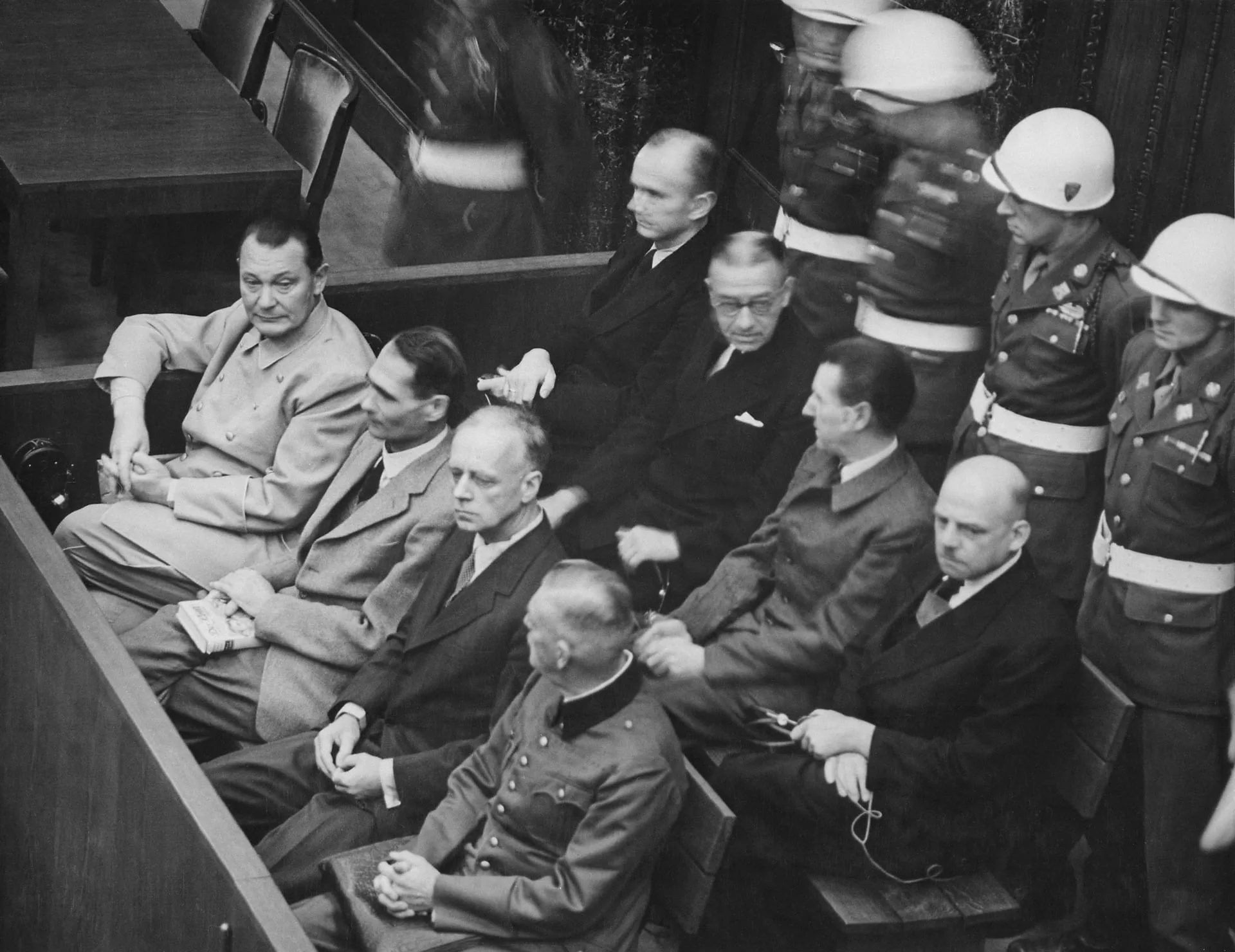
1945. Nuremberg. The Charter of the International Military Tribunal was signed on 8 August 1945 by the United States, the United Kingdom, France and the USSR. Its Article 6(b) defined war crimes as: murder, ill-treatment or deportation of civilians, murder or ill-treatment of prisoners of war, killing of hostages, plunder of property, wanton destruction of cities. The Tribunal tried 22 people. The Soviet judge was I. T. Nikitchenko, the prosecutor Roman Rudenko. 19 defendants were convicted, 12 of them sentenced to death, and three were acquitted.
1949. The Geneva Conventions. The notion of “grave breaches” appeared: wilful killing, torture, unlawful deportation and other acts against protected persons. Every state is obliged to search for suspects and try them regardless of nationality or hand them over.
1977. Additional Protocol I. It set out rules for the conduct of hostilities, including distinction, proportionality and precautions in attack, and expressly called grave breaches war crimes. The USSR joined it in 1989, making a statement related to the fact-finding commission. In October 2019 Putin revoked that statement by decree: according to him, the commission was effectively inactive and the risk of its abuse for political purposes was growing.
1993. The Tribunal for the former Yugoslavia. Set up by the UN in May 1993, it charged more than 160 people, including heads of state and prime ministers, and closed on 31 December 2017. In the Tadić case (1995) it formulated the condition of individual responsibility that international tribunals have since consistently followed.
1998. The Rome Statute. A permanent court, adopted by a diplomatic conference in Rome on 17 July 1998. It entered into force on 1 July 2002. Russia signed the Statute on 13 September 2000 but did not ratify it. On 16 November 2016, by order No. 361-rp, it declared its intention not to become a party. Shortly before that, the ICC Prosecutor had called the situation in Crimea an international armed conflict.
2014–2025. Ukraine and the ICC. Ukraine twice accepted the Court’s jurisdiction by special declarations. On 2 March 2022 the Prosecutor opened an investigation following referrals from States Parties, which reached 43 over March and April. In August 2024 parliament ratified the Statute, and from 1 January 2025 Ukraine has been the 125th party. Ukraine also made a declaration under Article 124: for seven years after the Statute’s entry into force for Ukraine, it does not accept the Court’s jurisdiction over war crimes allegedly committed by its nationals. As Ukraine intends it, jurisdiction over crimes on its territory, including those by Russian troops, remains. A declaration limited to a state’s own nationals is a first. Lawyers disagree on whether it can be limited in this way and how it relates to Ukraine’s earlier declarations, on which the warrants already issued are based. We found no ruling by the judges on this.
Which crimes by the Russian army in Ukraine have been documented
The overall scale: as of the end of July 2026, the UN Human Rights Office had verified the deaths of at least 16,874 civilians, including 820 children, and injuries to 51,273. These are verified deaths, not 16,874 proven crimes.
The UN Commission of Inquiry restated its overall finding in November 2025. In its conclusion, Russian armed forces and authorities committed a wide range of war crimes: deportation and transfer of children and adults, attacks on civilians and civilian objects, wilful killing, killing and wounding of prisoners, torture, rape, and excessive harm in strikes on the energy system. Separately, it classified torture, enforced disappearances, murder and forcible transfer of population as crimes against humanity.
Below are the most widely known episodes. The list is not complete. It was selected on two criteria: the event is widely known, and there is a document on it that can be checked. Each episode indicates who established what.
Killings of civilians under occupation
Bucha, February–March 2022. After Russian troops left, the municipal authorities say, 458 bodies were found in the Bucha area. The most thoroughly documented stretch is Yablunska Street. Units and names of servicemen have been established, primarily from the 234th Air Assault Regiment. Separate pieces cover the shooting at cars fleeing the town, torture and unlawful detention and sexual violence. Status: as of April 2026, 215 Russian servicemen had been served with notices of suspicion over crimes in the Bucha area.
Izium, September 2022. After the city’s liberation a mass burial site was found in a forest. Kharkiv Regional Military Administration head Oleh Syniehubov reported the exhumation of 436 bodies: most with signs of violent death, 30 with signs of torture, most of them civilians, 21 military. Status: figures from the Ukrainian authorities. The archive has no separate article on this yet.
Strikes on civilian objects
Mariupol maternity hospital, 9 March 2022. Three people were killed and about 17 wounded; a wounded pregnant woman and her newborn baby died later. Experts of the OSCE Moscow Mechanism concluded that the hospital was destroyed by a Russian attack which, going by Russia’s own explanations, was deliberate. No warning was given. The experts called it a clear violation of IHL and a war crime. Status: OSCE expert report of 13 April 2022, not a court decision.
Mariupol Drama Theatre, 16 March 2022. People sheltering from shelling had been living in the theatre for two weeks, and the word “CHILDREN” was written in large letters in front of and behind the building. Detailed analysis: two aerial bombs of about 500 kg each. Status: Amnesty International calls the strike a clear war crime, and OSCE experts write that the building was clearly marked as a shelter for children. The exact death toll has not been established: the city council spoke of about 300, AP estimated about 600, and Amnesty confirmed at least dozens.
Kramatorsk railway station, 8 April 2022. 61 dead, including 7 children, 121 wounded. A Tochka-U missile with a cluster warhead struck a crowd of evacuees.
Mykolaiv Regional Administration, 29 March 2022. 36 or 37 dead, 21 of them civilians. Status: notices of suspicion in absentia to Generals Dvornikov and Zusko and Colonel Goraichuk; the question of the target’s lawfulness is examined in the article.
Amstor shopping centre in Kremenchuk, 27 June 2022. 22 dead, 59 wounded. Two Kh-22 missiles.
Apartment block in Dnipro, 14 January 2023. 46 dead, including 6 children, at least 80 wounded. A Kh-22 missile.
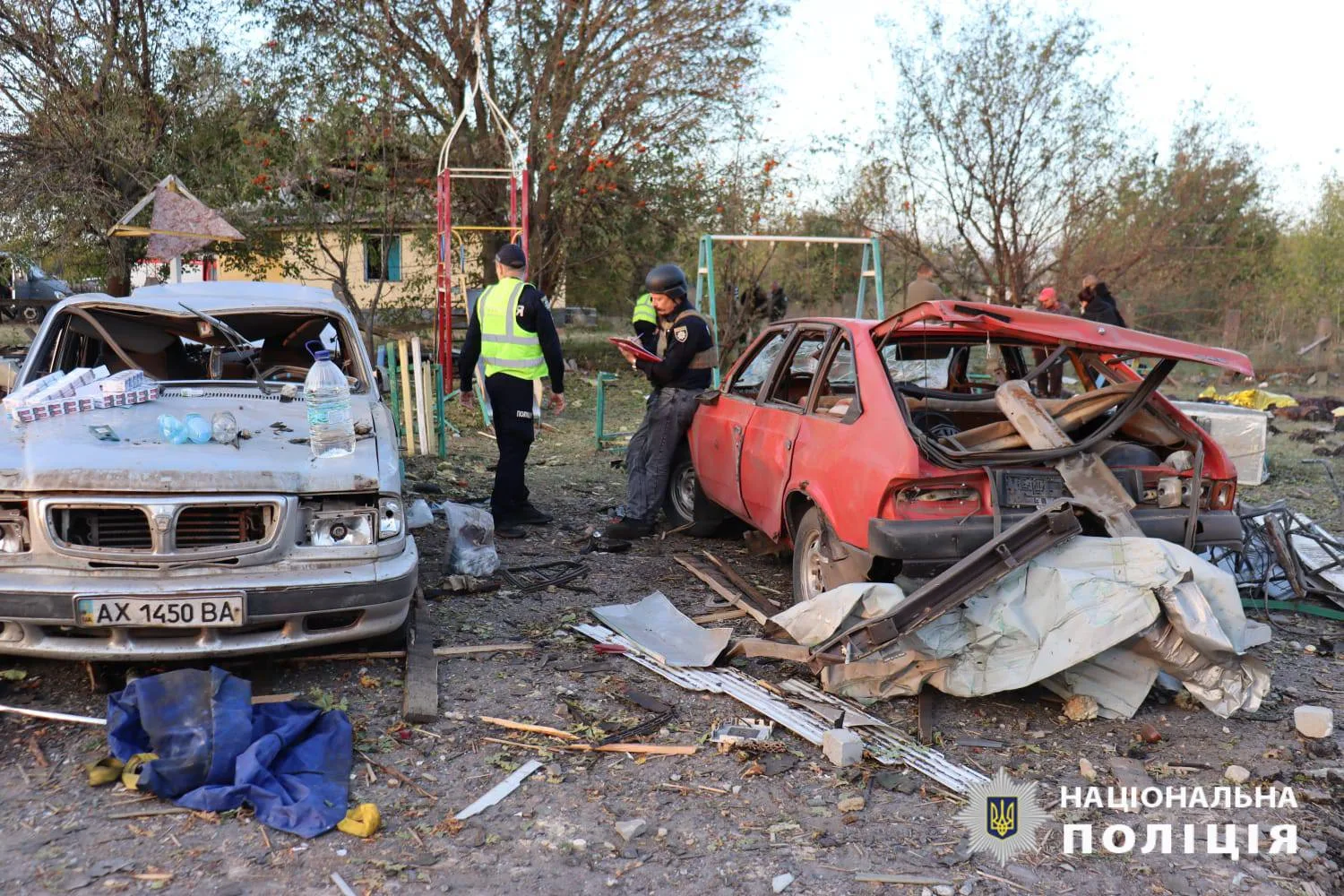
Hroza, Kharkiv Oblast, 5 October 2023. A missile hit a café where a wake was being held. 59 people were killed. The UN Human Rights Office found reasonable grounds to believe that the strike was Russian, that the wake itself was the target and that the weapon was a precision one, likely an Iskander, and all the dead were civilians. Status: a UN finding; one of the deadliest single strikes on civilians since the invasion began. More in “The Hroza Strike: 59 Villagers Killed at a Funeral Reception on October 5, 2023”.
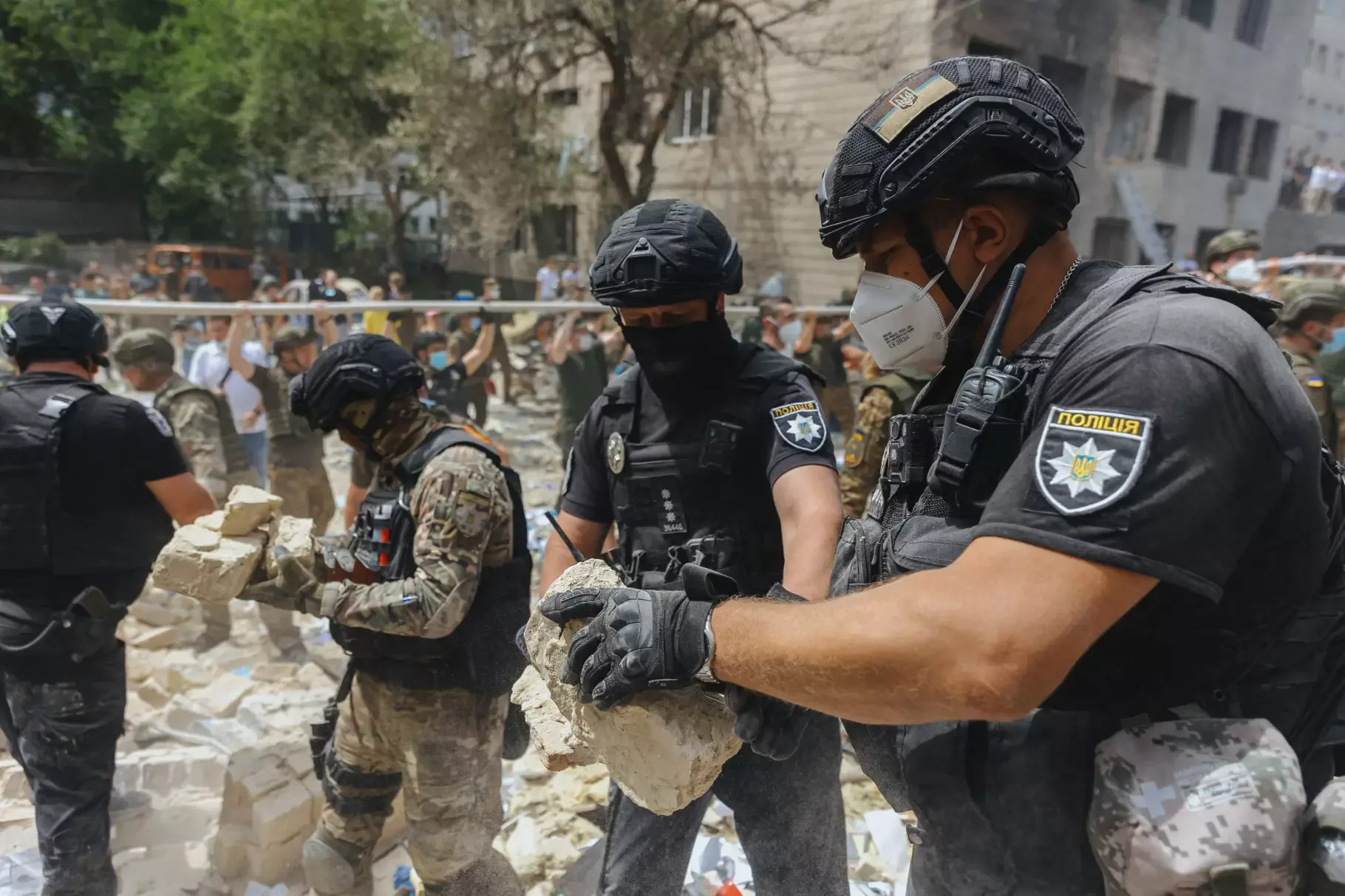
Okhmatdyt children’s hospital, Kyiv, 8 July 2024. About 670 children and 1,000 staff were in the hospital at the time, and two people were killed. Danielle Bell, head of the UN monitoring mission, said that analysis of video and an inspection of the site indicated a high likelihood of a direct hit rather than damage from an intercepted missile. The team could not reach a final determination, although the missile, in its assessment, had been launched by Russia. The Russian Defence Ministry claimed a Ukrainian air defence missile had fallen. Status: a preliminary UN assessment; both versions of the cause are shown.
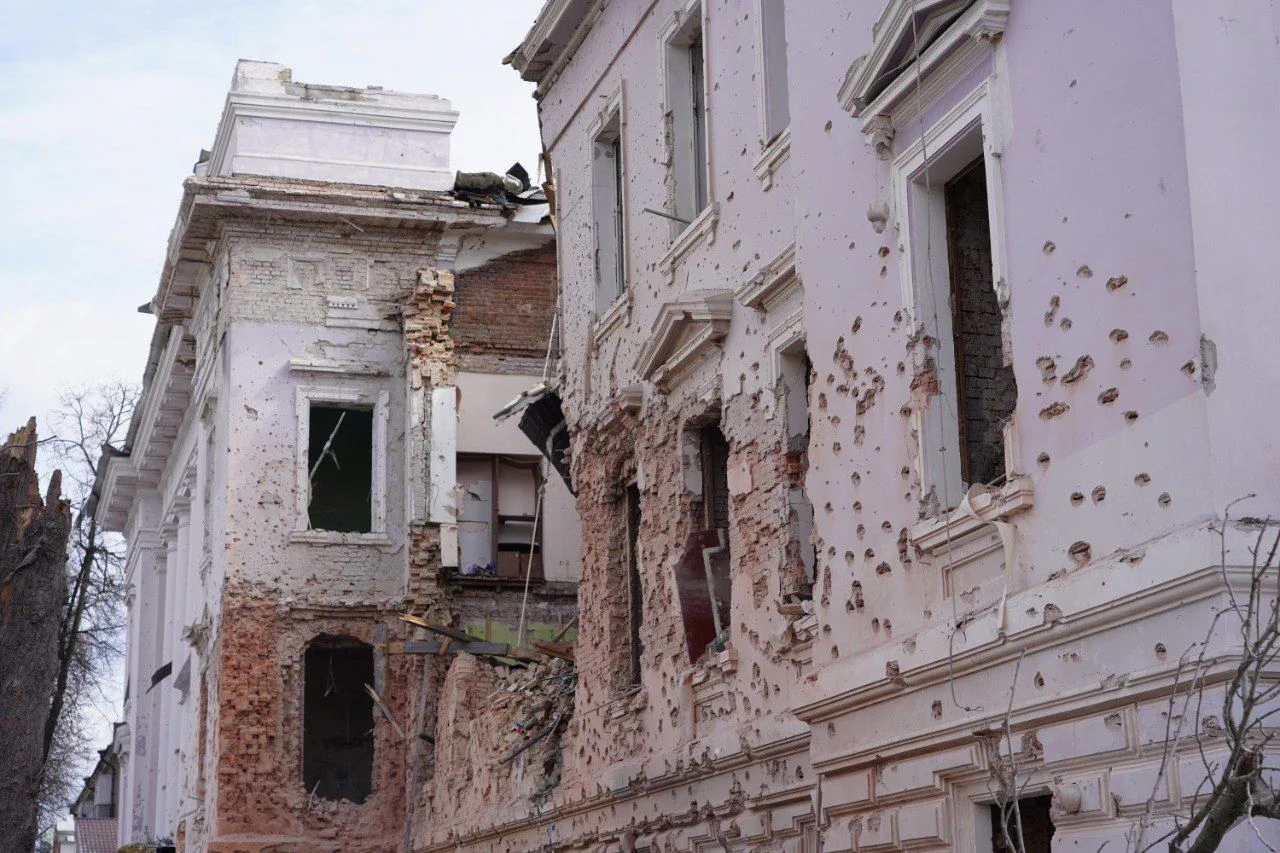
Sumy, 13 April 2025. On Palm Sunday two ballistic missiles hit the city centre. The State Emergency Service reported 35 dead and 129 wounded. Status: figures from the day of the strike. We did not find a legal assessment by an international body.
Prisoners of war
Olenivka, night of 28–29 July 2022. An explosion at a penal colony in the occupied part of Donetsk Oblast killed at least 51 and wounded at least 139 Ukrainian prisoners. The UN Human Rights Office concluded that the cause was not a HIMARS missile, as Russia claimed, and that the damage looked more like a shell fired from the east. Russia held the prisoners close to the front line, which itself violates humanitarian law. Status: publicly, the UN has not named those responsible. According to AP, an internal UN analysis places responsibility on Russia, but it is a non-public document, not an official accusation. The UN fact-finding mission was disbanded after five months because Russia refused to guarantee the experts’ safety. In 2025, ombudsman Dmytro Lubinets announced that the UN had finally accused Russia, but his source turned out to be an unknown organisation that denies any link to the UN. His office admitted it had not verified the information. According to the UN, civilians detained after filtration were also sent to this colony; more in “The Filtration of Mariupol Residents”. The explosion is covered in detail in “The Olenivka Explosion: The Killing of Ukrainian Prisoners of War at Penal Colony No. 120”.
Executions of those who surrendered. As of June 2026, the UN Human Rights Office had verified the executions of 129 Ukrainian prisoners of war and others hors de combat, including at least 16 between mid-November 2025 and January 2026. Ukraine’s ombudsman cites at least 337 cases as of the end of 2025. The counting methods differ, so the figures are not directly comparable. In 2023 the UN found authentic two videos: in one, Russian servicemen shot a prisoner after he said “Glory to Ukraine”; in the other, a Russian serviceman beheaded a Ukrainian. Status: according to prosecutors, as of July 2025 the killings of 273 prisoners had been documented and two people convicted. In November 2025 a Russian serviceman who had shot a prisoner received a life sentence in Ukraine for the first time.
Torture in captivity. In the same report, nearly all the repatriated prisoners interviewed described torture and ill-treatment: beatings, electric shocks, denial of medical care.
Hunting with drones in Kherson Oblast
From July 2024, Russian forces used drones to kill and wound civilians along more than 100 km of the right bank of the Dnipro. Operators saw their targets on live video, the targets were visibly civilian, and the footage was published on Russian Telegram channels. On 28 May 2025 the UN Commission concluded that this was murder as a crime against humanity and a war crime. According to the official data it cites, nearly 150 people were killed and hundreds wounded. In October 2025 it extended the finding to forcible transfer of population.
Strikes on the power system
From 10 October 2022 to 9 March 2023, a campaign of missile strikes was waged on power plants and substations. The ICC issued four warrants: on 5 March 2024 for Lieutenant General Sergei Kobylash and Admiral Viktor Sokolov, and on 24 June 2024 for Sergei Shoigu and Valery Gerasimov. The judges found reasonable grounds to believe that the strikes were directed against civilian objects. They also considered the case where an object might have been military: the expected harm would still have been clearly excessive. This is one of the few cases in which international judges have already ruled on the lawfulness of the target itself.
Deportation of children
On 17 March 2023 the ICC issued warrants for Vladimir Putin and Children’s Rights Commissioner Maria Lvova-Belova: unlawful deportation and transfer of children from occupied territories. In March 2026 the UN Commission concluded that these are also crimes against humanity, confirming 1,205 cases. The Ukrainian register lists 19,546 children. Details are in a separate article.
Torture, disappearances, sexual violence
The UN Commission classified torture and enforced disappearances as crimes against humanity committed as part of a state policy. It counts rape and sexual violence, including as a form of torture, among war crimes. A 2026 UN report records sexual violence against prisoners, civilian detainees and residents of occupied territories.
Who tries these cases, and how
Ukraine. The first verdict for a war crime in this war was in the case of 21-year-old Sergeant Vadim Shishimarin, who shot 62-year-old Oleksandr Shelypov in the village of Chupakhivka. In May 2022 the court gave him life; in July the appeal court cut the sentence to 15 years. Today most cases have no defendant present: of 208 people convicted as of November 2025, 19 were sentenced in person, and, according to the director of the Institute of Human Rights of the Ukrainian Bar Association, 97–98% of such cases are heard in absentia.
International Criminal Court. Six warrants. The Court does not hold trials in absentia: the accused must be present (Art. 63). We found no reports of any of the six being detained.
Courts of third countries. Some states try crimes committed outside their borders. In Finland, a former commander of the Rusich group, Yan Petrovsky, also known as Voislav Torden, was sentenced to life in March 2025 for crimes against Ukrainian soldiers in 2014. On 31 August 2026 the appeal court overturned part of the verdict and cut the sentence to 12.5 years. His lawyer intends to appeal to the Supreme Court.
UN Commission. It is an investigative body, not a court. The evidence it has collected, as it points out itself, can be used in current and future proceedings.
What Russia says
Russia denies targeting civilians as such. Its statements on particular episodes vary: staging in Bucha (analysis), a Ukrainian air defence missile falling on Okhmatdyt, HIMARS at Olenivka. The Russian embassy called the Finnish verdict politicised. In 2016 Russia stated that it did not intend to become a party to the Rome Statute.
The rules apply to all sides
The definition does not depend on who is right in the war. The UN Commission also investigates Ukraine’s actions and has found it responsible for certain violations: indiscriminate attacks, as well as arbitrary detention, torture and disappearance of people accused of “collaboration”. It could not complete its investigation of some allegations against Ukraine because of lack of access, concerns for the safety of witnesses and the silence of the Russian authorities. This archive is devoted to crimes by the Russian army; the definition is the same for everyone.
What has not been established
- How many war crimes have been committed in total. Neither the 221,929 registered offences nor the 16,874 verified deaths show this.
- Sumy. We did not find a legal assessment by an international body.
- Olenivka. Who carried out the strike. The UN has ruled out HIMARS, but there is no public finding on who was responsible.
- Izium. The figures come from the Ukrainian authorities; we did not find an independent count.
- Okhmatdyt. The sources we opened contain no final UN conclusion on the cause of the destruction.
- Russia’s position on most episodes. The statements are collected only in part.
- Enforcement. We did not find reports that any of the six people named in ICC warrants has been detained.
Sources
Law
- ICRC — Customary IHL, Rule 156: definition of war crimes
- ICRC — Customary IHL, Rule 14: proportionality
- ICRC — Customary IHL, Rule 15: precautions in attack
- Rome Statute of the International Criminal Court
- UN depositary — Rome Statute, status and entry into force
- Additional Protocol I, Article 52 — ICRC
- Additional Protocol I, Article 57 — ICRC
- Additional Protocol I, Article 85 — ICRC
- Fourth Geneva Convention, Article 146 — ICRC
- Fourth Geneva Convention, Article 147 — ICRC
History
- ICRC — Lieber Code, 1863
- ICRC — Geneva Convention, 1864
- ICRC — St Petersburg Declaration, 1868
- ICRC — Hague Convention II, 1899
- ICRC — Hague Convention II, preamble
- Wikipedia — Martens Clause
- Encyclopedia.com — Leipzig Trials
- Wikipedia — Leipzig war crimes trials
- Yale Law School, Avalon Project — Charter of the International Military Tribunal
- United States Holocaust Memorial Museum — International Military Tribunal at Nuremberg
- International Criminal Tribunal for the former Yugoslavia — about the Tribunal
Russia, Ukraine and the ICC
- The Moscow Times — Putin revokes statement on Protocol I, 17 Oct 2019
- EJIL: Talk! — Russia’s withdrawal of signature from the Rome Statute
- ICC — situation in Ukraine
- ICC — warrants for Putin and Lvova-Belova, 17 Mar 2023
- ICC — warrants for Kobylash and Sokolov, 5 Mar 2024
- ICC — warrants for Shoigu and Gerasimov, 24 June 2024
- International Bar Association — Ukraine becomes the 125th party
- Lawfare — Ukraine’s ratification and Article 124
- Coalition for the ICC — Ukraine becomes the 125th State Party, Article 124 declaration
- Just Security — Ukraine’s ratification and Article 124, 20 Aug 2024
- Atlantic Council — ratification and questions over ICC jurisdiction
- JURIST — agreement on the Special Tribunal, June 2025
UN and OSCE
- UN in Ukraine — Commission of Inquiry, summary of findings, 7 Nov 2025
- UN in Ukraine — Commission on drones in Kherson Oblast, 28 May 2025
- The Moscow Times — UN Commission on deportation of children, 10 Mar 2026
- Interfax-Ukraine — UN mission data for July 2026, 13 Aug 2026
- Interfax-Ukraine — UN on 129 executions of prisoners, 29 June 2026
- OSCE Moscow Mechanism — expert report, 13 Apr 2022
Episodes
- Amnesty International — the theatre strike as a war crime, June 2022
- Ukrinform — exhumation in Izium, 23 Sept 2022
- RFE/RL — UN on the Hroza strike
- The Kyiv Independent — all 59 killed in Hroza were civilians
- Ukrainska Pravda — UN on Okhmatdyt, 9 July 2024
- Meduza — UN on Okhmatdyt, Defence Ministry version, 9 July 2024
- ZMINA — the strike on Sumy, 13 Apr 2025
- Novaya Gazeta Europe — 35 dead in Sumy, 13 Apr 2025
- Mind.ua — UN report on Olenivka and executions of prisoners
- Euromaidan Press — AP on the internal UN analysis of Olenivka, 30 July 2024
- Euromaidan Press — the UN has not publicly blamed anyone for Olenivka, 11 July 2025
- The Kyiv Independent — ombudsman on 337 executions, 3 Mar 2026
Courts
- Interfax-Ukraine — interview with the director of the UBA Institute of Human Rights, 5 June 2026
- LIGA.net — Prosecutor General’s Office on the number convicted, 8 Nov 2025
- RFE/RL — the Shishimarin case, 29 July 2022
- Al Jazeera — the Torden verdict, 14 Mar 2025
- RFE/RL — appeal in the Torden case, 31 Aug 2026
- Reuters via Cyprus Mail — Russia denies targeting civilians, 29 Mar 2022
Photographs
- Wikimedia Commons — defendants at Nuremberg, US Army, public domain
- Wikimedia Commons — National Police of Ukraine photo, Hroza, 5 Oct 2023, CC BY 4.0
- Wikimedia Commons — Ministry of Internal Affairs of Ukraine photo, Okhmatdyt, 8 July 2024, CC BY 4.0
- Wikimedia Commons — National Police of Ukraine photo, Sumy, 13 Apr 2025, CC BY 4.0


