Key facts
- Dates: from February 24, 2022 to May 20, 2022, when Russia declared full control of the city. By March 2 the city was almost encircled
- Population: about 540,000 before the invasion. By mid-May about 400,000 had left; by mid-2022 roughly a fifth of the residents remained in the city
- Deaths: the exact number is unknown and may never be established. The best-founded independent estimate: at least 10,284 burials and at least 8,000 war-related deaths (HRW, Truth Hounds, SITU, February 2024). How many of them were civilians has not been established. Other figures below
- Destruction: by mid-May 93% of the 477 multi-story apartment buildings in the central part of the city had been damaged, as had all 19 hospital campuses and 86 of 89 educational facilities
- Suspects: prosecutors notified Andrei Mordvichev of suspicion in absentia; the SBU notified Nikolai Gostev. HRW names 10 people who may bear command responsibility, including Vladimir Putin
- Legal assessment: HRW considers many of the attacks apparently unlawful. The UN Commission of Inquiry calls the attacks indiscriminate and is examining whether the siege itself was a crime against humanity. We have found no court ruling on the siege as a whole
- Russia’s position: the Russian authorities did not answer HRW’s questions. On individual strikes, Moscow said the targets were military or blamed the Ukrainian side
Why Mariupol
Mariupol stands on the Sea of Azov, about 200 km from Crimea and 10 km from the line behind which the forces of the so-called DNR had stood since 2014. Taking it gave Russia a land corridor from Donbas to Crimea, about 80% of Ukraine’s Azov coastline and the largest port on that sea, through which steel, coal and corn were exported. The city was home to two of the country’s largest steelworks, Illich and Azovstal.
The city had been at the center of fighting once before. In April 2014 DNR forces briefly tried to take it and withdrew. Many residents, HRW writes, thought this time too it would soon be over. Vaagn Mnatsakanian, a city council staffer, recalled a council meeting on February 23: “everyone said we were safe and that everything would be okay.”
How the siege unfolded
The timeline follows the report by HRW and Truth Hounds, based on the testimony of dozens of witnesses and on data from the Institute for the Study of War and governments.
- February 24. Russian and DNR forces begin shelling the city from nearby villages: tanks, heavy artillery, multiple rocket launchers, missiles, aircraft. At first mainly the Left Bank.
- February 25–27. Shelling damages the railway near Volnovakha. Trains stop running.
- March 2. The city is almost encircled. A strike on a transformer substation leaves the whole city without water.
- March 3–4. The first strikes on the center.
- March 9. The first Russian ground forces in the city center. That day, the strike on the maternity hospital and children’s hospital.
- March 11. An air-dropped bomb hits a five-story building at Mytropolytska Street 98. At least 17 dead.
- March 14. The first ad hoc convoys of private cars leave the city.
- March 15–22. At least five Russian naval ships start shelling the city.
- March 16. The strike on the drama theater.
- April 1. Russia takes almost the entire Left Bank.
- April 10. Russia takes the whole Central District.
- April 20. Russia takes the Prymorskyi District.
- April 21. Shoigu reports to Putin that the city has been taken, except for Azovstal. Putin congratulates the troops.
- April 29 – May 7. Evacuation of civilians from Azovstal.
- May 16–20. The surrender of the Azovstal defenders.
A city without water, power or heat
Water. On February 25 damage to the power grid stopped the pumps that supplied water from a canal. The city switched to water from a reservoir. On March 2 a strike on the power grid stopped those pumps too. From that day the whole city was without running water.
Electricity. HRW traces the failures through the register kept by the DTEK company: between February 25 and March 2 it recorded eight incidents in which substations went offline in groups. The March 2 strike on a transformer substation, in HRW’s assessment, appears to have been deliberate. In most of the other cases the cause of the damage is unclear.
Daily life. People melted snow and cooked over open fires. The UN Commission of Inquiry notes that water and food had to be fetched outside, under shelling and in freezing temperatures. There was no connection with the outside world. One resident recalled that people did not know whether Mariupol was still under Ukrainian control, or even whether the president was still in the country.
Medicine. Volunteer Mykhailo Puryshev says: “The worst problem was probably not with food or heat, but with medication. And people were just dying because there was none.”
Why people could not leave
This question matters for any assessment of the siege: the laws of war do not prohibit sieges as such, but they require that civilians be allowed to leave and that humanitarian aid not be blocked.
The first days. Evacuation trains were free but often left half empty: people did not believe how serious the threat was. By February 28 Russian forces were already blocking aid: they did not let through a truck with medicines from Zaporizhzhia. Ukrainian officials estimate that 100,000 to 130,000 people had left by early March.
March 1–13. Almost no one could get out of the city.
March 5 is telling. Russia’s Defense Ministry announced a ceasefire from 9 a.m. The city council’s messages on Telegram run as follows: at 10:28, the evacuation will begin at 11:00, with the route and gathering points, including the drama theater; at 12:18, the ceasefire applies only in Donetsk Oblast; at 13:42, the evacuation is postponed; at 14:20, Russia’s Defense Ministry confirmed safe passage, but the Russian army began shelling the corridor. The next day it all happened again.
Convoys of buses and trucks with humanitarian aid from Zaporizhzhia failed to get through time after time. They were stopped at Russian checkpoints, and some of the aid was unloaded in Berdiansk. A senior UN official told HRW that, as far as she knew, Moscow did not want aid to come from Ukrainian-held territory, although it said otherwise, while the Russian authorities kept saying the road was unsafe.
Buses. About 100 city buses were prepared at the bus depot to take people out. From the night of March 4 the depot was shelled, and by March 13 only five or six were undamaged. On satellite images from March 12–14 some of the buses stand across streets as barricades, 29 and another 11, many of them burned. HRW does not say who put them there.
Gathering points. According to Deputy Prime Minister Iryna Vereshchuk and the deputy head of the city council, the Russian side asked for the addresses of the boarding points. The drama theater was one of them.
Each side blamed the other. HRW writes that Ukraine repeatedly accused Russia of breaking agreements, while Russian officials accused Ukraine of the same and of preventing civilians from leaving. The OSCE mission recorded exactly that in April 2022: each side accuses the other. On the basis of testimony, HRW points to obstruction by Russia, and its report gives specifics on checkpoints and routes. Russian officials, for their part, cited the danger on the roads. On March 7 the ICRC’s director of operations said that one of the agreed routes was mined. The report does not say by whom.
On March 11 Russia proposed its own routes: two directions toward Rostov-on-Don, via Novoazovsk and via Taganrog.
From March 14 people began leaving in ad hoc convoys of private cars. Russia appears to have generally allowed passage subject to searches. Between March 14 and 31 the Zaporizhzhia city council registered 59,067 people from Mariupol and the surrounding area. The journey took one to three days, through 15 to 20 Russian checkpoints, with phones checked and men searched.
Strikes on homes, hospitals and shelters
The HRW and Truth Hounds report examines in detail 14 attacks on 18 sites. Some examples:
- March 1, a food warehouse near Azovstal. The city stored food for distribution here. Half the warehouse was destroyed and one person was killed.
- March 9, Pryazovskyi State Technical University. At least two dead. Witnesses saw no military targets at the university.
- March 11, Mytropolytska Street 98. An air-dropped bomb hit a five-story building, killing at least 17.
- March 13, Shevchenka Lane 29a. Seven people were killed; the HRW press release says eight. About 800 meters from Azovstal.
- March 15, Kazantseva Street 20. A former dormitory where 172 people were sheltering at the time of the attack. At least two dead.
- March 16, the Neptune pool, Military Hospital #555 and Metalurhiv Avenue 213. Strikes minutes apart. Two civilians were killed near the residential building and 10 people in the hospital. As HRW notes, military hospitals are protected just as civilian ones are. The pool was serving as an aid distribution point.
In these cases, HRW writes, no Ukrainian military presence was found in or near the building, except for a few cases with a very limited presence where the harm to civilians was disproportionate.
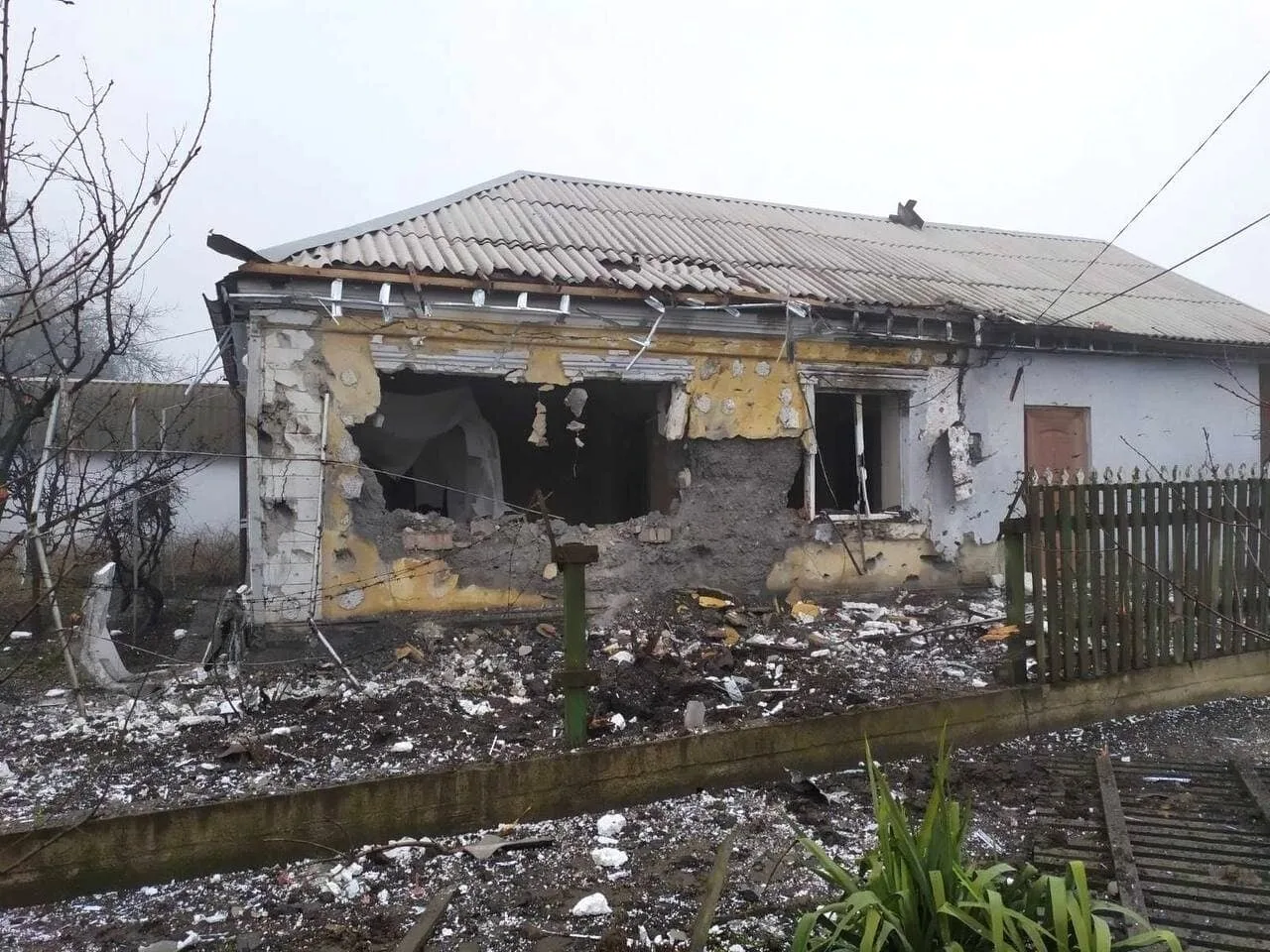
On the presence of Ukrainian forces. The city was being defended, and the report shows it. Witnesses describe Russian strikes on three schools where Ukrainian forces were based. The Regional Intensive Care Hospital also treated wounded soldiers, and Ukrainian troops guarded it until early morning on March 12. The law requires all parties, to the extent feasible, to avoid locating military objectives in or near densely populated areas. Russian and DNR forces also based themselves in hospitals: from late March the DNR set up a base in Hospital No. 3, and one of the wounded there said they had been treated well. After occupying the regional hospital, Russian forces, according to an anesthesiologist, “appeared to bring civilians with them to use as human shields.”
The maternity hospital. According to the OSCE mission’s report, on March 9 a maternity hospital with a 390-bed children’s hospital was heavily damaged. Three people were killed and about 17 injured. The mission concluded that Russia carried out the strike and that it was a clear violation of international humanitarian law.
The drama theater. On March 16, according to HRW and Amnesty, two air-dropped bombs hit the building where hundreds of people were sheltering, with the word “CHILDREN” written in front of it and behind it. The death toll remains disputed: HRW has at least 15 identified, the OSCE mission 300 according to the city authorities, AP closer to 600. All versions are examined in a separate article. Russia claims the Azov battalion blew up the theater; the OSCE mission received no indication that this could have been the case.
How the dead were buried
At first, residents buried the dead. Vaagn Mnatsakanian, the 34-year-old head of a city council department, realized on March 6 that there was no one in the city to collect bodies. His father had died the day before, apparently of a heart attack after shelling. When he brought the body to the morgue, about 50 bodies were lying there and not a single member of staff. Between March 6 and 12, officials and volunteers buried at least 200 bodies in a temporary trench at the Old City Cemetery. Two more trenches were dug on March 14, in Prymorskyi Park and in the City Garden.
People were buried in courtyards, on playgrounds, near schools. The UN Commission of Inquiry recorded the account of a mother who had to leave without burying her nine-year-old daughter, killed when their home was shelled.
Then the occupation authorities collected the bodies. After taking the city, Russian forces, HRW writes, collected bodies from the streets and homes, from April from the rubble, and exhumed makeshift graves. According to one witness, Ukrainian prisoners of war were forced to help. The bodies were taken to a makeshift morgue at Zaporizke Highway 23, near the Metro shopping center, and then to cemeteries.
After the fighting, people kept dying. A senior health official told HRW that before the pandemic 27 to 28 people a day died in the city of 540,000, while in the summer of 2022, by his estimate, about 50 a day died out of a population of roughly 150,000. The causes: no medicine, no dialysis, poor water. In June 2022 the WHO was concerned about the risk of cholera.
How many people died
The range is enormous. We do not pick one figure, because each one counts something different.
| Figure | What it is | Who and when |
|---|---|---|
| ~5,000 | Deaths, preliminary estimate | Government of Ukraine, March 28, 2022 |
| ~5,000 | Civilians | Konstantin Ivashchenko, appointed mayor by DNR forces, April 8, 2022 |
| ~21,000 | Civilians | Mayor Vadym Boichenko, April 12, 2022 |
| ~22,000 | All deaths from the Russian assault | The mayor, as cited by HRW, May 2022 |
| nearly 2,000, plus probably thousands more | Recorded civilian deaths | UN Monitoring Mission, as cited by HRW, 2022 |
| 1,348, including 70 children; the real number probably thousands higher | Civilian deaths in hostilities verified by OHCHR | UN High Commissioner Michelle Bachelet, June 16, 2022 |
| 3,000–9,000 | Buried in Manhush | Mariupol City Council, as cited by HRW, April 21, 2022 |
| at least 10,284 | New burials in five cemeteries | HRW, Truth Hounds, SITU, February 2024 |
| at least 8,000 | Deaths above the normal death rate | HRW, Truth Hounds, SITU, February 2024 |
How the figure of 10,284 was reached. HRW counted graves on satellite images; in the trenches, where individual graves are not visible, it counted plaques in drone footage and extrapolated the density to the whole area.
| Cemetery | Burials |
|---|---|
| Starokrymske | 8,580 (6,687 in trenches and 1,893 in individual graves) |
| Vynohradne | 864 |
| Novotroitske | 480 |
| Manhush | 315 |
| Pavlov Street | 45 |
How the figure of 8,000 was reached. At a normal death rate of about 1%, some 2,250 people would have died in the city over that year. The difference from 10,284 gives at least 8,000.
What to keep in mind about these figures. HRW itself stresses that 10,284 is not an estimate of the number of dead but a minimum number of burials. It does not include those who remained under the rubble, died after leaving, or lie in graves that were never moved. Some graves hold several bodies. Nor is it possible to say how many of them were civilians, how many military, and how many were killed by unlawful attacks.
Manhush. On April 21, 2022 the Mariupol City Council said that Russian forces had buried between 3,000 and 9,000 people there. Maxar images taken from mid-March to mid-April showed more than 200 new graves. Using imagery from March 9 to October 12, 2022, HRW counted at least 315 individual graves. One of the deputy mayors later told HRW that some of the graves, when opened, held several bodies, so more than 315 people may have been buried there, the organization writes. These sources contain no confirmation of the figure of 3,000–9,000.
What the UN says. The UN Commission of Inquiry: “the actual number cannot be verified at present.” It had no access to the city.
Azovstal
Both soldiers and civilians were sheltering at the plant. From April 29 the UN and the ICRC carried out a safe passage operation agreed by the parties after the UN Secretary-General’s visits to Moscow and Kyiv. The first group, 101 people, was brought out of the plant, and another 58 joined in Manhush. UN coordinator Osnat Lubrani wrote that they could finally see the daylight after two months. By May 7 about 500 women, children and older people had been evacuated.
Between May 16 and 20, according to Russia’s Defense Ministry, 2,439 fighters surrendered. HRW cites the same figure. Zelensky said the mission to defend the plant was over, and Deputy Defense Minister Hanna Malyar spoke of an exchange. In those same days State Duma speaker Vyacheslav Volodin called the Azov fighters “Nazi criminals” who should not be included in prisoner exchanges.
Ukrainian prisoners of war, including defenders of Azovstal, were held in the penal colony in Olenivka. On the night of July 29, 2022 the barracks where they were held was destroyed by an explosion. What is known about its cause is examined in “The Olenivka Explosion: The Killing of Ukrainian Prisoners of War at Penal Colony No. 120”.
Filtration and removal
While the city was being taken, many residents were moved to Russia and to occupied territory. HRW described this in September 2022 in a separate report, “We Had No Choice.” People often waited their turn for days or weeks in schools, clubs and tents. “Filtration” included fingerprinting and photographing, body and belongings searches, phone checks and questions about political views.
HRW also recorded something else. Some people went to Russia voluntarily, including men who could not leave Ukraine because of martial law. Those who had money for private transport could often leave for Ukrainian-held territory, sometimes without any filtration at all. Russian buses, meanwhile, went only to the DNR or other Russian-controlled territory. How many people were removed by force is unknown. That a transfer is forced even when a person has no genuine choice, the organization explains with reference to the case law of the tribunal for the former Yugoslavia.
Among those taken from Mariupol to Russia were thousands of children. Such transfers underlie the International Criminal Court’s warrants for Vladimir Putin and Maria Lvova-Belova. More on this in the article on the deportation of children.
More in “The Filtration of Mariupol Residents”.
What became of the city
Demolition. From May 2022 the occupation authorities cleared the rubble. In February 2023 Oleg Morgun, the “mayor” they installed, as HRW writes, said 287 of 409 buildings slated for demolition had been demolished, and by March 31, 2023 the list had grown to 447. He said “an extremely small” number of bodies had been recovered during demolitions. One media outlet reported 2.5 million tons of rubble removed.
Clearing rubble is lawful in itself, HRW notes: dangerous buildings have to be taken down. But because independent investigators and experts were not allowed into the city, the demolitions, the organization concludes, effectively destroyed physical evidence at hundreds of possible crime scenes.
Construction. Under a plan obtained by the outlet The Village, the population is to grow to 500,000 by 2035. New housing, according to a Dutch newspaper, went mainly to pensioners, people with disabilities, Russian construction workers and loyal residents.
Homes of those who left. In April 2025 BBC Verify counted at least 5,700 homes earmarked for seizure. In June 2026 the outlet Novosti Donbassa counted about 25,000 apartments and houses on lists of “ownerless” housing, roughly 15% of the housing stock. To keep a home, owners have to travel through Russia, pass checks and prove ownership.
Identity. According to media reports collected by HRW, a Russian passport is required to work as a teacher or doctor, to open a business or to receive a pension. Schools teach in Russian with a Russian curriculum, streets have been given back their Soviet names, and the memorial to the victims of the Holodomor has been torn down.
Putin’s visit. Late on March 18, 2023, the day after the ICC warrant, Putin flew into Mariupol by helicopter and drove around the city. Russian television showed him chatting with residents outside what looked like a newly built residential complex. It was his first trip to territory that Russia declared annexed in September 2022. In footage released by the Russian side, he also visits the theater building.
Who bears responsibility
Units. HRW identified 17 units that operated in the city in March and April 2022: Southern Military District formations, special forces, Chechen forces and the DNR’s 1st Army Corps. The finding is based on Russian official statements, social media and obituaries.
Who may be responsible as a commander, in HRW’s assessment:
- Vladimir Putin
- Sergei Shoigu
- Valery Gerasimov
- Sergei Rudskoy
- Aleksandr Dvornikov
- Viktor Zolotov
- Andrei Mordvichev
- Ramzan Kadyrov
- Adam Delimkhanov
- Denis Pushilin
This is a suggestion of possible responsibility, which the organization considers grounds for investigation, not a court’s charge. It relies on public statements. For example: on March 11 Shoigu said he was giving updates to Putin “every day of the week”; on March 29, according to the Kremlin, Putin told Emmanuel Macron that the assault on Mariupol would end when the Ukrainian forces surrendered; and on April 21 he congratulated the troops.
Ukrainian cases.
- September 29, 2022. A notice of suspicion in absentia for Andrei Mordvichev, commander of the 8th Guards Army. According to the investigation, from February to May he gave orders to shell from command posts in Mariupol, Manhush, Nikolske and elsewhere.
- July 28, 2023. A notice of suspicion from the SBU for Nikolai Gostev, commander of the 4th Air and Air Defense Forces Army. The SBU alleges that missile and bomb strikes on civilian infrastructure were carried out on his orders, including the use of phosphorus munitions. We have not checked the phosphorus claim against other sources.
We have found no other suspicions or verdicts for the siege itself. That does not mean there are none: suspicions over the drama theater are described in a separate article.
International court. The ICC is investigating the situation in Ukraine; the warrants for Putin and Lvova-Belova concern the deportation of children, not the attacks on the city.
Russia’s position
- The maternity hospital. According to the OSCE report, the Russian side claimed the building had been evacuated and was being used by the military, and Russia’s permanent representative to the UN said the crater was left by a planted mine. The mission was unable to match the images offered in support of the military-use claim with any buildings within a kilometer of the hospital.
- The theater. Russia claims Azov blew it up.
- The corridors. Russia accuses Ukraine of breaking ceasefires and preventing civilians from leaving.
- Questions from human rights researchers. HRW sent the Russian government a summary and questions on December 4, 2023 and had received no reply by February 1, 2024.
Legal qualification
- The siege. In itself not prohibited. What is prohibited is causing disproportionate harm to civilians, arbitrarily preventing civilians from leaving, and blocking humanitarian aid.
- The attacks. The UN Commission of Inquiry considers the attacks in Mariupol indiscriminate, in violation of international humanitarian law, and is examining whether the siege from February to May 2022 was a crime against humanity. This report reaches no final conclusion: the Commission had no access to the region.
- Forced displacement. HRW considers it a war crime and a possible crime against humanity.
- Use of human shields. Prohibited for all parties.
In its overall conclusion the OSCE mission found clear patterns of such violations by Russian forces. It also noted individual violations and problems in Ukraine’s conduct, but could not confirm claims that the harm attributed to Russia had been caused by Ukraine.
More on these terms in “What Is a War Crime”.
What has not been established
- How many people died. Figures range from 5,000 in early statements to 22,000, and all come with caveats. None of the estimates establishes how many of the dead were civilians.
- How many bodies remained under the rubble or were removed with it.
- Who ordered specific strikes, beyond the in-absentia suspicions against a few individuals.
- Who caused each individual corridor attempt to fail, and why. Testimony and correspondence point to Russian checkpoints, but each attempt has its own story.
- How many people were removed by force. There is no overall figure.
- The death toll at the drama theater. See the separate article.
- Whether phosphorus munitions were used. This is an SBU claim, which we have not checked separately.
- Who placed the buses as barricades.
Further reading
Separate articles
- The Airstrike on the Mariupol Drama Theatre, March 16, 2022 — two air-dropped bombs, the word “CHILDREN” in front of the building and the dispute over the death toll
- The Deportation of Ukrainian Children to Russia — the system of removal, the evidence and the ICC warrants
- The Filtration of Mariupol Residents: Screening, Detention and Transfer to Russia — how people were screened in the DNR, who was detained and why many ended up in Russia
- The Olenivka Explosion: The Killing of Ukrainian Prisoners of War at Penal Colony No. 120 — the move to a separate barrack, the two sides’ claims, the UN’s findings and the fate of the survivors
- What Is a War Crime — the terms used in this article
Planned separate articles:
- Mariupol’s cemeteries and the count of the dead
- The corridors and the blockade of humanitarian aid
Films and visual material
- “20 Days in Mariupol.” Mstyslav Chernov, AP and PBS Frontline. The first Oscar for AP, March 10, 2024. Chernov, Evgeniy Maloletka and Vasilisa Stepanenko arrived in the city an hour before the shelling began, and two weeks later they were the last journalists working for an international outlet there.
- Beneath the Rubble: an interactive reconstruction by SITU Research, HRW and Truth Hounds, with 3D models of seven buildings.
Timeline
In detail in the section “How the siege unfolded.”
- February 24, 2022. Shelling begins.
- March 2, 2022. The city is almost encircled, with no water or electricity.
- March 14, 2022. The first convoys of private cars.
- March 16, 2022. The drama theater.
- April 13, 2022. The OSCE mission publishes its report.
- April 21, 2022. Russia declares control of the city, except for Azovstal.
- May 20, 2022. Russia’s Defense Ministry announces full control of the plant.
- September 1, 2022. HRW on filtration.
- September 29, 2022. Notice of suspicion for Mordvichev.
- March 18–19, 2023. Putin in Mariupol.
- July 28, 2023. Notice of suspicion for Gostev.
- February 8, 2024. The report by HRW, Truth Hounds and SITU.
- March 10, 2024. The Oscar for “20 Days in Mariupol.”
- April 2025. BBC Verify on the seizure of homes.
- June 2026. Novosti Donbassa on 25,000 “ownerless” addresses.
Sources
- UN Commission of Inquiry on Ukraine: A/HRC/52/CRP.4, 29.08.2023
- OSCE: report of the Moscow Mechanism mission, 13.04.2022
- UN: statement by Osnat Lubrani on the evacuation from Azovstal, 03.05.2022
- OHCHR: Michelle Bachelet’s update on Mariupol to the Human Rights Council, 16.06.2022
- HRW, Truth Hounds, SITU: “Our City Was Gone,” 08.02.2024, full text
- HRW: press release and video transcript, 08.02.2024
- SITU Research: Beneath the Rubble
- Truth Hounds: on the report’s findings
- HRW: “We Had No Choice,” 01.09.2022
- Gordon: notice of suspicion for Andrei Mordvichev, 29.09.2022
- Slovo i Dilo: notice of suspicion for Nikolai Gostev, 28.07.2023
- Ukrainska Pravda: the government’s estimate, 28.03.2022
- Reuters via Global News: Vadym Boichenko’s statement, 12.04.2022
- AFP via The Malaysian Insight: statement by the Russian-installed official, April 2022
- NBC News: Maxar images, Manhush, 22.04.2022
- Euronews: the declaration of victory, 21.05.2022
- Al Jazeera: the fate of those who surrendered, 17.05.2022
- AP via NY1: Putin in Mariupol, 19.03.2023
- BBC Verify: Russia seizing thousands of homes in occupied Mariupol, April 2025
- Ukrainska Pravda: “ownerless” housing, 26.06.2026
- AP via GBH: the Oscar, 11.03.2024
- Euromaidan Press: what is known about the Olenivka explosion, 11.07.2025