Key Facts
- Period of occupation: February 27 – March 30, 2022 (33 days)
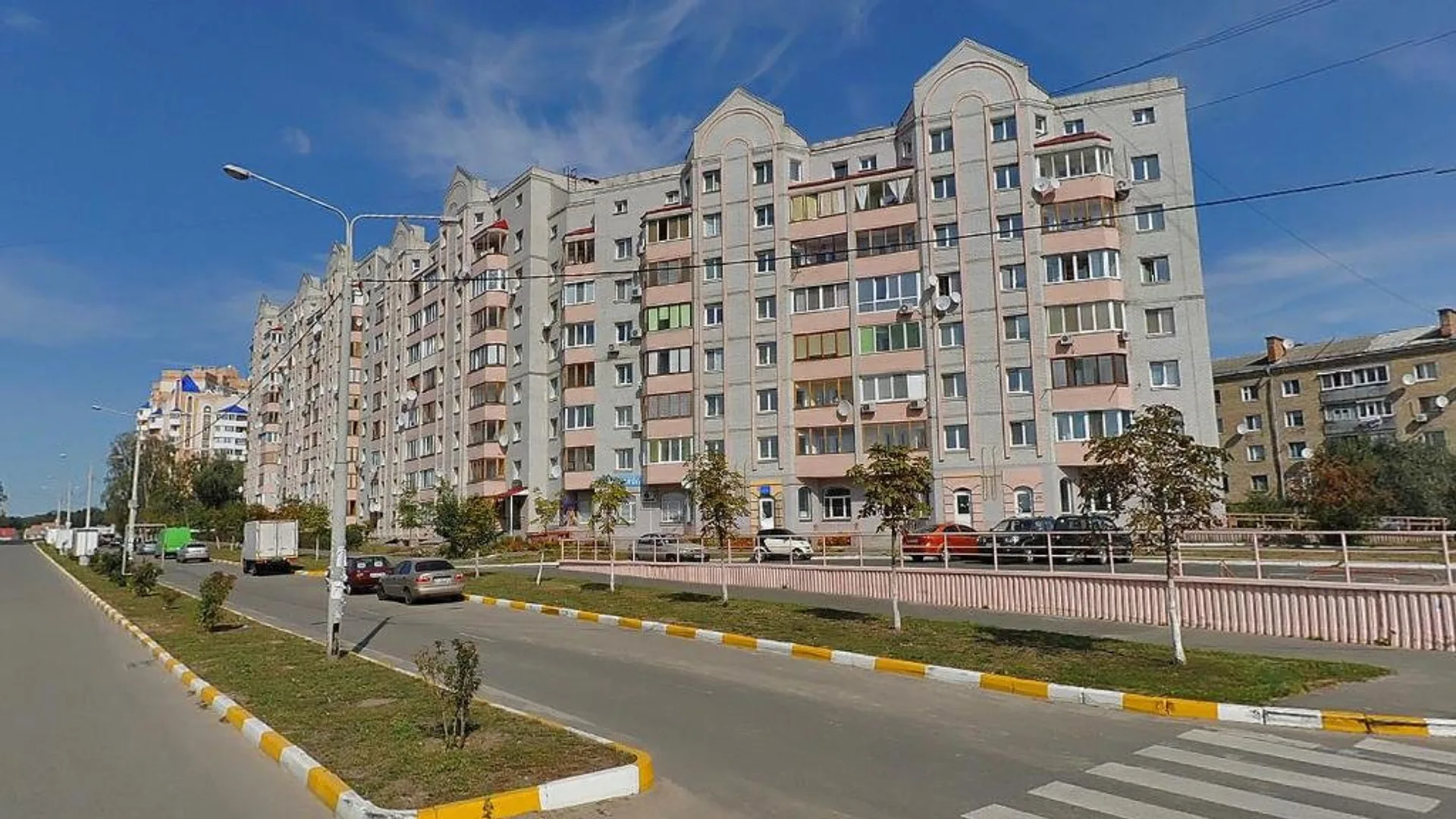
- Location: city of Bucha, Kyiv Oblast, Ukraine (suburb of Kyiv, 25 km northwest of the capital’s center)
- Occupying forces: units of the 64th Separate Motor Rifle Brigade (Khabarovsk), the 234th Air Assault Regiment of the 76th Guards Airborne Division (Pskov), and other formations of the Russian Armed Forces’ Western Military District
- Population during occupation: of the pre-war 37,000–50,000 residents, up to 3,500 people remained in the city throughout the 33-day occupation — predominantly the elderly, families with small children, and those unable to evacuate
- Civilian deaths: after liberation, 458 bodies were found in Bucha, of which 419 died from gunfire and shrapnel, 39 presumably from natural causes linked to occupation conditions, including 9 children under 18. Approximately 50 bodies had bound hands and signs of torture; many were mutilated and burned. From a mass grave near the Church of St. Andrew the Apostle, 116–119 bodies were recovered. In July 2023, a memorial was opened in Bucha bearing 501 names of the dead — and the list is incomplete (Fakty.ua). According to President Zelenskyy, more than 1,400 people were killed in Bucha and the wider Bucha district, including 37 children. OHCHR verified 73 killings of civilians (54 men, 16 women, 2 boys, 1 girl) and continued verifying another 105 cases
- Nature of crimes: extrajudicial executions, shootings during evacuation, torture at specially equipped sites, sexual violence (victims aged 4 to 80+), unlawful detention and “filtration,” systematic looting, destruction of civilian infrastructure
- Legal qualification: war crimes (HRW, Amnesty International, OHCHR); possible crimes against humanity
Context: The Kyiv Offensive and Occupation
Following the launch of the full-scale invasion on February 24, 2022, Russian forces entered Ukraine from Belarus along the northern axis, attempting to rapidly encircle and capture Kyiv. By late February, advance units had seized a number of settlements northwest of the capital — Bucha, Irpin, Hostomel, and Vorzel — controlling key highways.
Bucha — a city with a pre-war population of approximately 37,000–50,000 — became one of the strongpoints of the Russian force grouping. Most residents evacuated or fled, but up to 3,500 civilians remained in the city throughout the occupation — predominantly the elderly, families with small children, and those unable to leave (RMTeam — Rapid Assessment). Russian military units occupied residential buildings and courtyards, used civilian infrastructure for deployment, and set up checkpoints on key streets. Military-age men were detained, interrogated, and frequently shot on the spot (OHCHR).
By March 30–31, following the failure of the Kyiv offensive, the Russian command ordered a withdrawal. On April 1–2, Ukrainian forces entered Bucha. On the streets, in courtyards, in basements, and in makeshift graves lay the bodies of hundreds of civilians.
.CkEIrQVS_Z15O9hO.webp)
A Month of Terror: Timeline of Crimes
First Week (Late February – Early March)
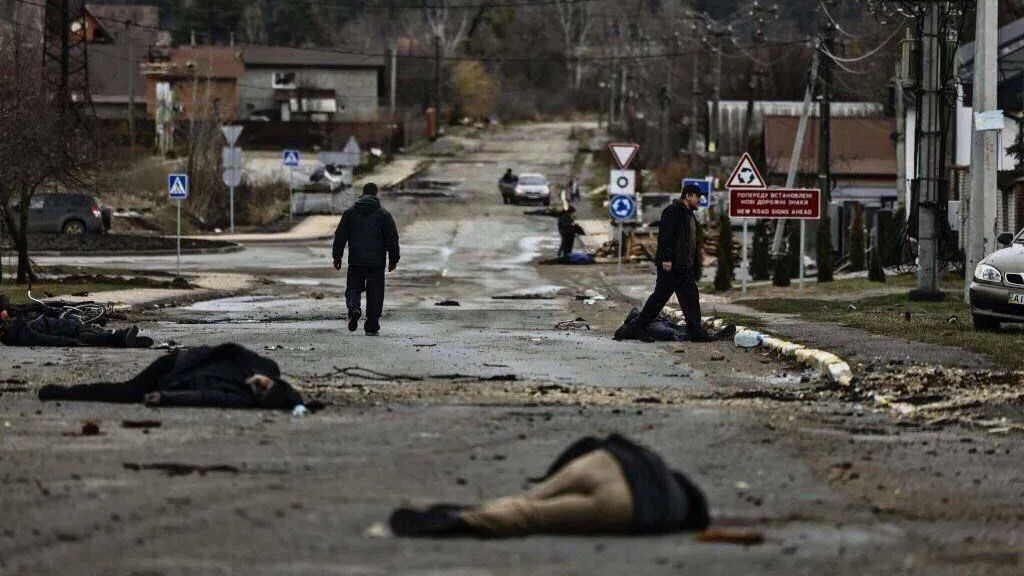
Russian forces establish control over the city. Checkpoints are set up at key intersections — Yablunska, Vokzalna, Vodoprovidna streets. Shootings of civilian vehicles, cyclists, and pedestrians begin without warning.
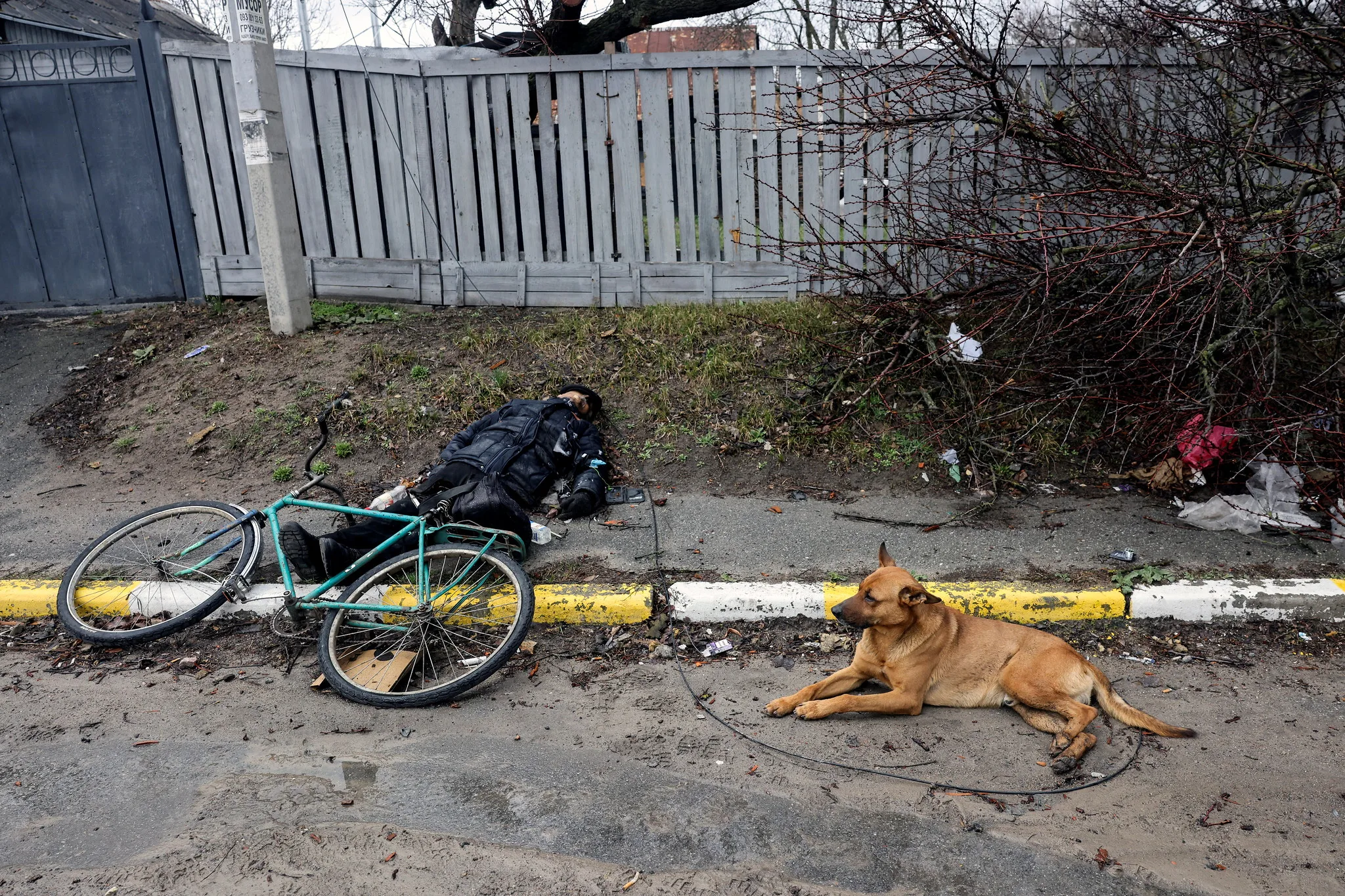
March 5, 2022 — Iryna Filkina, 52, a utility worker, was shot while cycling at the intersection of Yablunska and Vodoprovidna streets. Commander of the 234th Air Assault Regiment Artem Taraiev (born 1995) ordered soldiers to shoot all civilians appearing at the intersection; as a result of his order, 13 people were killed (Espreso.tv). The photograph of Iryna’s hand with red manicure, which became a symbol of Bucha, went around the world (NYT).
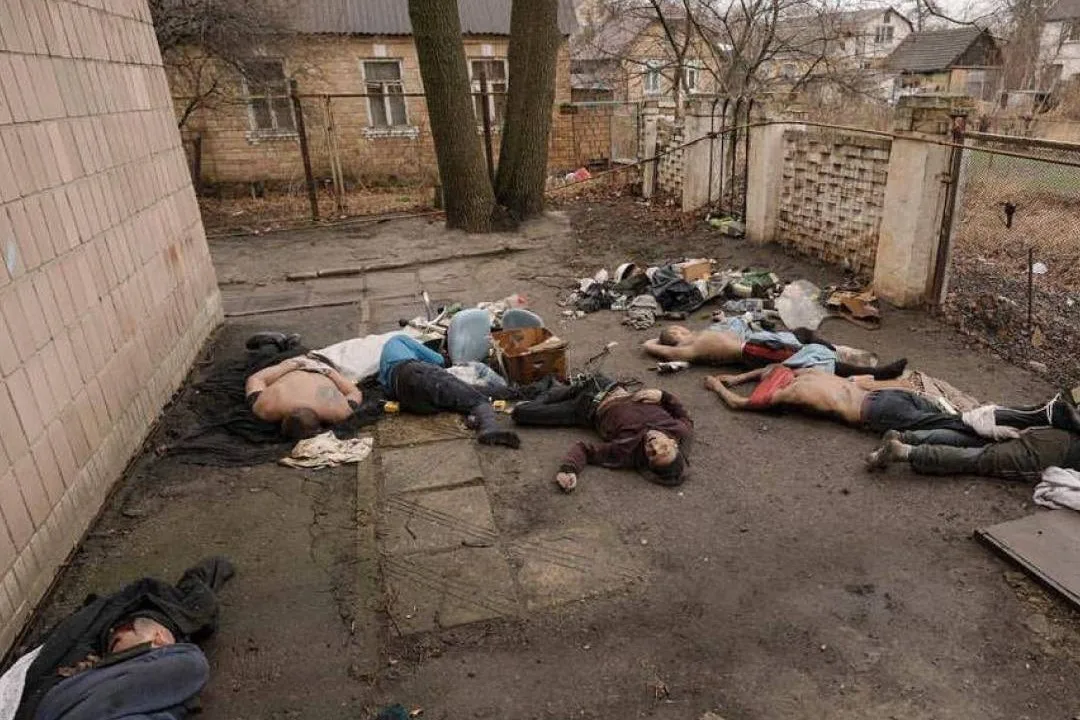
March 4 — according to Human Rights Watch, Russian soldiers gathered five men, forced them to lie on the ground, and shot one of them in the back of the head.
Mid-March: Sweeps and Executions
Russian units conduct systematic raids on homes. Men are interrogated, their phones checked for contacts with Ukrainian military or pro-Ukrainian content. Detainees are taken to basements or courtyards — their bodies bearing signs of torture are found after liberation.
After March 12 — on Ivan Franko Street, six Russian servicemen successively detained, interrogated, and killed at least 17 civilians and brutalized three others (Le Monde). This episode was classified as a separate criminal case.
The New York Times identified at least 36 civilians killed along Yablunska Street alone. Their bodies are visible on Maxar Technologies satellite imagery as early as March 9–11 — and remain in the same locations through the end of the month.
Final Ten Days of March
A portion of the population has already evacuated or perished. Executions of those attempting to leave shelters are recorded, as well as deaths from lack of medical care. Near the Church of St. Andrew the Apostle, a trench approximately 14 meters long appears — a mass grave visible on satellite imagery from March 10 (NV; Reuters). After liberation, 116–119 bodies will be recovered from this grave — people shot and hastily buried; some residents were forced to dig the trench and bury bodies at gunpoint (Ukrainian Institute; National Post).
April 1–2: The World Learns the Truth
Russian forces withdraw. Ukrainian troops and journalists enter the city. On the streets — dozens of bodies: some with bound hands, bullet wounds to the head, signs of torture. Satellite imagery from Maxar Technologies confirms: bodies had been lying on the streets since early March — long before Russian forces withdrew.
.obifNTSz_1FYzkx.webp)
Russia’s Position
Russia immediately rejected all accusations. The Russian Ministry of Defense stated that the bodies had been “planted” by the Ukrainian side after Russian forces withdrew. The Ministry of Foreign Affairs called the videos and photographs a “staging.” At UN sessions, the Russian delegation demanded the handover of “full personal data” of witnesses and victims, accusing OHCHR reports of “relying on dubious sources” (UN General Assembly resolution).
Specific claims by the Russian side:
- “All bodies were planted after Russian forces withdrew”
- “The killings were carried out by Ukrainian forces entering the city”
- “Video and photographic materials are staged”
- “The Azov battalion and other radical formations are responsible”
None of these claims have been supported by any evidence.
Facts and Evidence
1. Satellite Imagery: Bodies Lay for Weeks
Maxar Technologies provided a series of satellite images taken on March 18, 19, and 31 — a period when Bucha was under full Russian control. The images clearly show bodies on Yablunska Street (Reuters).
The New York Times matched satellite imagery with ground-level video footage from April 1–2: bodies were in the exact same positions. AFP, which visited the city on April 3, photographed corpses in exactly the same locations visible on imagery from March 19 — two weeks before Ukrainian forces arrived.
This fact completely and irrefutably disproves Russia’s claim of “planted” bodies.
2. OHCHR: Systematic Executions
OHCHR conducted 12 field visits to Bucha through October 2022 and documented:
- 73 confirmed killings of civilians in Bucha between March 4 and 30 (54 men, 16 women, 2 boys, 1 girl)
- 105 additional cases in the verification stage
- At least 50 unlawful killings (including extrajudicial executions) were recorded during the first visit on April 9
OHCHR emphasizes: the killings were not random. Bodies were found at detention and interrogation sites. Many victims were killed by close-range shots to the head or neck — hallmarks of extrajudicial executions (OHCHR thematic report).
3. Human Rights Watch: “Trail of Death”
HRW conducted in-person interviews with 32 residents and 5 more by phone. The organization documented at least 16 apparently unlawful killings, including:
- 9 extrajudicial executions (including the shooting of detained men on the street)
- 7 indiscriminate killings of civilians
- 2 cases of wounding of civilians
HRW characterized the actions of Russian forces as a “trail of death” — clear violations of international humanitarian law and possible war crimes.
4. Amnesty International
Amnesty International (statement of April 3, 2022) characterized the events in Bucha as part of a broader pattern of war crimes by Russian forces in occupied territories of Ukraine. The organization documented extrajudicial executions, torture, and indiscriminate killings of civilians, calling for an immediate investigation.
5. Visual Investigations: NYT, AP/FRONTLINE/SITU
The New York Times conducted a series of visual investigations:
- “Bucha’s Month of Terror” — a spatial reconstruction of killings on Yablunska Street
- “New Evidence Shows How Russian Soldiers Executed Men in Bucha” — a minute-by-minute reconstruction of executions based on drone and surveillance camera footage
FRONTLINE (PBS), Associated Press, and SITU Research jointly produced the documentary film “Crime Scene: Bucha” (December 2022), using:
- Hundreds of hours of surveillance camera recordings
- Intercepted phone calls of Russian soldiers
- A 3D model of the city assembled from drone footage
- Survivor testimonies
6. Intercepted Calls of Russian Servicemen
The New York Times gained access to intercepted phone calls of soldiers operating in Bucha. Al Jazeera quotes one of the intercepts: a soldier speaks of orders to “kill everyone we see,” while another describes “corpses on the road,” specifying — “civilians, not ours.” In one call, a serviceman recounts how his unit shot three men who were passing by — in the absence of any military threat.
Business Insider reports an intercept in which a Russian serviceman describes killing civilians in a casual tone — evidence of the normalization of violence against the civilian population.
Debunking Propaganda Myths
Since the discovery of bodies in Bucha, Russia has waged a large-scale information campaign, deploying the MFA, the Ministry of Defense, UN Ambassador Nebenzya, and state media. Below is a brief refutation of the main narratives. A detailed debunking of all 8 myths with in-depth analysis of each is available in a separate article.
Myth 1: “Corpses Are Moving in the Video — It’s Staged”
Debunked: Deutsche Welle, AP, and AFP determined that the “waving hand” was a stain on the windshield of a car, and the “sitting-up corpse” was an optical distortion from a side mirror. The Russian side deliberately degraded the quality of the Espreso TV video, slowing and looping a fragment to create the illusion of movement. AFP journalists photographed those same bodies the next day — motionless, with signs of decomposition.
Myth 2: “Bodies Were Planted After Russian Forces Withdrew”
Debunked: Maxar Technologies satellite imagery from March 11, 18, and 19 — a period of full Russian control over the city — shows bodies on the streets of Bucha (Reuters; BBC; The Guardian). Expert Jeffrey Lewis (Middlebury Institute): “On the ground, bodies lie next to cars and buildings — and on satellite images you see the same marks in the same place.”
Myth 3: “The Mayor of Bucha Was Smiling — So Nothing Happened”
Debunked: Mayor Fedoruk was reporting the withdrawal of Russian forces on March 31, when the full scale of what had occurred was not yet known. Bodies were discovered during systematic clearing operations on April 1–2. The emotional state of an official at the moment of liberation is not evidence of the presence or absence of victims (Factcheck.ge).
Myth 4: “National Guard Video from April 2 Shows No Bodies”
Debunked: The video was filmed on a different street and along a different route than Yablunska, where most bodies lay. Other videos and photos from that same April 2 — by AFP, Reuters, and AP — document dozens of bodies (BBC).
Myth 5: “Soldiers Are Dragging Bodies — It’s Staged”
Debunked: AP confirmed: Ukrainian sappers attached cables to bodies and pulled them away, checking for booby traps — Russian forces had systematically mined corpses. This is a standard demining procedure.
Myth 6: “The Killings Were Committed by the Ukrainian Armed Forces or Azov”
Debunked: Satellites show bodies 2–3 weeks before Ukrainian forces entered. All residents interviewed by OHCHR describe killings during the occupation period. Surveillance cameras capture Russian soldiers at the sites of killings (RFE/RL). Azov was in Mariupol — 700+ km from Bucha.
Myth 7: “Bucha Was a Provocation to Derail Peace Talks”
Debunked: Killings occurred throughout March (from the 4th–5th). 458 bodies, a mass grave, hundreds of witnesses, satellite images from three dates, surveillance cameras, intercepted communications — the scale is incompatible with a “staging.” Similar crimes were documented in Irpin, Hostomel, and Vorzel — a “provocation” would have required coordination across three regions.
Myth 8: “The BBC, Wikipedia, and the UN Are Coordinating a Fabrication”
Debunked: The crimes in Bucha have been confirmed by 15+ fully independent organizations (OHCHR, HRW, Amnesty, NYT, AP, FRONTLINE/SITU, Maxar, Reuters, AFP, BBC, DW, OSCE, UN Commission, U.S. State Department, EU). The theory of a coordinated fabrication of satellite imagery from a private company, intercepted communications, and forensic examinations is physically impossible.
Typology of Crimes
OHCHR and Human Rights Watch researchers distinguish several types of killings, each documented by numerous cases.
Extrajudicial Executions
The most characteristic type of crime in Bucha. Men were detained in homes or at checkpoints, interrogated, their phones checked — and shot. OHCHR recorded at least 50 unlawful killings of this type: close-range shots to the head, bound hands, bodies at detention sites (OHCHR).
Killings During Evacuation and Movement
Civilians attempting to leave the city or move between neighborhoods were shot at checkpoints and from ambush positions — including vehicles with “Children” signs and white cloths. On Yablunska Street alone, the NYT identified at least 36 killed civilians.
Torture and Unlawful Detention
Russian forces set up specialized interrogation and torture sites in Bucha. Radio Free Europe documented the use of a basement beneath a recreation center as a torture chamber. Detainees were beaten, subjected to electric shocks, and suffocated; after interrogations, many were shot.
In intercepted phone calls, Russian soldiers use the term “zachistka” (literally “cleansing”) to describe their operations: hunting people from lists, “filtration,” interrogations, torture, and executions (Wikipedia — Bucha massacre). This was not chaotic violence — it was an organized procedure with its own terminology within the Russian army.
HRW describes “regular raids on homes”: soldiers broke into residences, checked phones for pro-Ukrainian content, and took men away. Some detainees returned — with bruises. Others did not. Their bodies were found in courtyards and basements with characteristic wounds (HRW).
Sexual Violence
The Independent International Commission of Inquiry on Ukraine documented cases of sexual violence in Bucha and neighboring settlements. Victims ranged in age from 4 to 80+ (Wikipedia — Sexual violence in the Russian invasion of Ukraine). Girls as young as 14 reported being raped by Russian soldiers.
By June 2022, OHCHR had received 108 reports of conflict-related sexual violence and verified 23 cases. Approximately 82.4% of registered cases were reportedly committed by Russian or pro-Russian armed formations (OHCHR).
Sexual violence in Bucha and the region was used not as a “side effect” of war but as an instrument of terror and subjugation of the civilian population — a conclusion reached by the UN Commission and the Special Representative of the Secretary-General on Sexual Violence in Conflict (UN Commission report).
Victims of Shelling
OHCHR describes civilian deaths in homes and courtyards resulting from artillery and mortar strikes on residential areas. In some episodes, it is impossible to determine whether a specific house was the target or was hit as a result of indiscriminate fire — however, the use of heavy weapons in residential areas is itself a violation of the principle of distinction (OHCHR thematic report).
Systematic Looting
A separate layer of crimes involves the organized plundering of residential homes. Russian soldiers did not merely loot — they shipped stolen property to Russia via parcels through the CDEK delivery service from the Belarusian city of Mozyr.
On April 2, 2022 — the day of the retreat from Bucha — approximately 2 tons of stolen property were shipped through the CDEK office within three hours. Surveillance cameras captured the soldiers’ faces and military uniforms (Belarusian project “Hayun”; Lb.ua). Parcels weighing from 50 to 450 kg contained computer equipment, household electronics, jewelry, tools, televisions, chainsaws, clothing, cosmetics, musical instruments, and children’s toys.
Most parcels were addressed to Rubtsovsk (Altai Krai), as well as Siberia, the Russian Far East, and Moscow. The SBU identified at least 18 servicemen implicated in the looting; many belonged to military unit 6720 of the Russian National Guard (Ukrainska Pravda; Ukrainska Pravda — parcel contents). All have been served with suspicion notices under the article on violations of the laws and customs of war (up to 12 years imprisonment, with no statute of limitations).
Those Responsible for the Crimes
Identified Units and Commanders
Ukrainian authorities have identified more than 2,500 Russian servicemen who were present in Bucha. Approximately 100 are suspected of war crimes, 34 have received suspicion notices, and 24 indictments have been submitted to courts (NV).
Lieutenant Colonel Azatbek Omurbekov — commander of the 64th Separate Guards Motor Rifle Brigade (Khabarovsk). Known as “The Butcher of Bucha.” Omurbekov’s brigade is accused of killings, torture, dismemberment, and burning of civilian bodies. Sanctioned by eight jurisdictions, including the U.S. State Department.
Yuriy Volodymyrovych Kim — platoon commander of the 76th Guards Airborne Division. In November 2025, he became the first commander (as opposed to an enlisted soldier) to receive a suspicion notice for coordinating crimes in Bucha: he is charged with 17 killings and 4 cases of cruel treatment of civilians. According to the investigation, Kim ordered his subordinates to “hunt, maim, and kill” people suspected of supporting Ukrainian forces, and to burn bodies to destroy evidence (Reuters; CNN; Global Rights Compliance).
Artem Taraiev (born 1995) — commander of the 234th Air Assault Regiment of the 76th Airborne Division. Identified as having given the order to shoot all civilians at the intersection of Yablunska and Vodoprovidna streets on March 5; 13 people were killed, including Iryna Filkina (Espreso.tv).
Colonel General Aleksandr Chaiko: Senior Commander
On March 16, 2026, the European Union imposed sanctions on 9 Russian military personnel for crimes in Bucha (Reuters). The most senior among them was Colonel General Aleksandr Chaiko — at the time of the invasion, he was the highest-ranking Russian military commander on Ukrainian territory and commanded the forces that entered Bucha.
Among the others sanctioned:
- Vadim Pankov, Major General
- Vladimir Seliverstov, Major General
- Sergei Chubarykin, Major General (commanded the 76th Airborne Division, to which Kim and Taraiev were subordinate)
- Aleksei Tolmachyov, Colonel
- Artem Gorodilov, Colonel
- Andrei Kondrov, Colonel
- Denis Suvorov, Lieutenant Colonel
- Viktor Filonov, paratrooper (Pskov)
Subordinates of these commanders participated in killings, torture, looting, and forcing civilians to collect the bodies of dead Russian soldiers (RBC Ukraine).
The Principle of Command Responsibility
Ukraine’s Deputy Prosecutor General Andrii Leshchenko stated that the case against Kim is a “fundamentally important step toward justice,” demonstrating that the crimes in Bucha were part of a “coordinated criminal plan involving the Russian command chain,” rather than the actions of individual soldiers (Reuters). The chain of responsibility is being reconstructed from the bottom up: from the rank-and-file perpetrator — through the platoon commander (Kim) and regiment commander (Taraiev) — to the division commander (Chubarykin) — to the senior theater commander (Chaiko). Under Article 28 of the Rome Statute, all links in the chain bear responsibility.
Survivor Testimonies
Testimonies from Bucha residents documented by Human Rights Watch, BBC, and OHCHR:
Denys Davidov, remained in Bucha throughout the occupation:
“When I arrived, I saw a street full of dead bodies. I just walked around them, and they were everywhere. Some corpses had been lying there so long that rain had covered them with dirt and sand.”
Basement survivor (anonymized by OHCHR), on Russian military raids:
“They came to the houses, took the men, checked their phones. Then we found their bodies — in courtyards, in basements. With gunshot wounds to the head.”
Natalia Verbova, widow of territorial defense fighter Andrii Verbovyi, on the shooting on Yablunska on March 4:
“The occupiers shot everyone except a guy who admitted that he and his companions weren’t construction workers but members of the territorial defense.”
From an intercepted phone call of a Russian serviceman (Al Jazeera):
“We were ordered to kill everyone we see… Corpses on the road. Civilians, not ours.”
Spatial Analysis: The Geography of Violence
OHCHR’s thematic report notes that killings in Bucha were concentrated along several streets, forming clusters that researchers interpret as areas of responsibility of specific Russian units.
- Yablunska Street — at least 36 killed civilians (NYT); bodies visible on satellite imagery from March 9
- Ivan Franko Street — at least 17 executed after March 12 (Le Monde)
- Zavodska Street and industrial zone — sites of mass burials and executions
- Vokzalna, Tarasivska, Tsentralna, Vodoprovidna — additional clusters of bodies
Detailed investigations of individual streets and episodes will be published in separate articles.
International Reaction
The discovery of bodies in Bucha triggered one of the largest diplomatic responses since the start of the invasion.
”This Is Genocide”
On April 3, 2022, Ukrainian President Volodymyr Zelenskyy visited Bucha and called what he saw genocide. On April 5, he addressed the UN Security Council via video link, urging it to either strip Russia of its veto power or “dissolve” the Security Council if it is unable to act. Zelenskyy proposed creating a tribunal modeled on the Nuremberg Trials (NPR).
Expulsion of Diplomats
Within two days of the footage from Bucha emerging, EU countries expelled more than 200 Russian diplomats and embassy staff. Germany expelled 40 people, France — 35, Italy — 30. By that point since the start of the invasion, EU countries had expelled more than 325 Russian diplomats (The Guardian).
Russia’s Suspension from the UN Human Rights Council
On April 7, 2022, the UN General Assembly voted to suspend Russia’s membership in the Human Rights Council: 93 in favor, 24 against, 58 abstentions. Ukrainian Ambassador Sergiy Kyslytsya drew a parallel between Bucha and the 1994 Rwandan genocide, warning of the danger of international indifference (UN News).
EU Sanctions (March 2026)
On March 16, 2026, the EU imposed personal sanctions on 9 Russian military personnel responsible for crimes in Bucha (details in the “Those Responsible” section). Additionally, 4 individuals were sanctioned for information manipulation and disinformation about Bucha, including Franco-Russian propagandist Adrien Bocquet — a recruiter of foreign mercenaries who “glorified war crimes” (Reuters).
Legal Qualification
War Crimes
Willful killings, torture, inhuman treatment, deliberate attacks on civilians constitute grave breaches of the 1949 Geneva Conventions and Additional Protocols, committed in the context of an international armed conflict (OHCHR; HRW; Amnesty International).
Possible Crimes Against Humanity
OHCHR and human rights organizations cautiously note: if it is proven that the killings, torture, and other acts were part of a widespread or systematic attack on the civilian population — and the repetition of analogous episodes in Irpin, Hostomel, Vorzel, and other settlements in Kyiv, Chernihiv, and Sumy oblasts (OHCHR documented 441 targeted killings in the region) directly points to this — the events fall under the definition of crimes against humanity.
Conclusion
The totality of evidence — satellite imagery, OHCHR field visits, HRW and Amnesty International investigations, NYT and AP/FRONTLINE/SITU visual reconstructions, intercepted Russian military communications, forensic examinations, and testimonies of hundreds of witnesses — unequivocally points to the responsibility of the Armed Forces of the Russian Federation for the mass killing of civilians in Bucha.
The nature of the crimes — systematic executions of detainees, shootings of civilians at checkpoints, torture, sexual violence, burning of bodies — indicates not “chaotic violence” or “excesses” by individual soldiers, but the toleration, encouragement, or deliberate ignoring of these practices at the command level. The identification of commanders Omurbekov, Kim, and Taraiev confirms: orders to kill came from above.
In Bucha, 458 civilians perished — men, women, 9 children. The memorial wall bears 501 names — and the list is incomplete. Across the wider Bucha district — more than 1,400 dead. Many were killed by a shot to the head with their hands tied behind their backs. Women and children were subjected to sexual violence. Detainees were tortured in basements. The possessions of the killed were shipped in parcels to Russia. Bodies lay on the streets for weeks while satellites recorded their coordinates and Russia called it a “staging.”
Four years later, the chain of command responsibility has been reconstructed — from the rank-and-file perpetrator to Colonel General Chaiko. The world responded with the expulsion of diplomats, Russia’s suspension from the UN Human Rights Council, and personal sanctions. But not one of the accused has been detained.
Bucha is not an isolated incident. It is a system.
Legal Status
| Institution | Status | Details |
|---|---|---|
| OHCHR | War crimes documented | 73 verified killings, 105 under verification, 12 field visits |
| Human Rights Watch | War crimes | 16 documented unlawful killings, “trail of death” |
| Amnesty International | Apparent war crimes | Statement of April 3, 2022, call for investigation |
| UN Independent Commission | Documented | In the context of systematic violations in northern oblasts |
| International Criminal Court (ICC) | Included in investigation | Materials submitted as examples of systematic crimes |
| U.S. State Department | Sanctions for war crimes | Omurbekov placed on sanctions lists for involvement in killings |
| Office of the Prosecutor General of Ukraine | Criminal proceedings | 34 suspicion notices, 24 indictments, 80+ investigations closed |
| European Union | Personal sanctions | 9 military personnel (incl. Colonel General Chaiko) + 4 for disinformation, March 2026 |
| UN General Assembly | Suspension of Russia’s membership in the Human Rights Council | 93 votes in favor, April 2022 |
| OSCE (Moscow Mechanism) | Documented in report | 94-page report, April 2022 |
Case Timeline
| Date | Event |
|---|---|
| 02/24/2022 | Full-scale invasion begins. Kyiv offensive launched |
| 02/27 – 03/05/2022 | Russian forces enter Bucha and establish control |
| 03/04–05/2022 | First documented executions on Yablunska. Shooting of Iryna Filkina |
| 03/09–11/2022 | Maxar satellite imagery captures bodies on streets |
| 03/10/2022 | Mass grave near the church visible on satellite imagery |
| 03/12/2022+ | Mass executions on Ivan Franko Street (17 killed) |
| 03/30–31/2022 | Russian forces withdraw from Bucha |
| 04/01–02/2022 | Ukrainian forces enter the city. Bodies discovered |
| 04/03/2022 | Amnesty International: “apparent war crimes” |
| 04/04/2022 | UN Security Council discusses the situation in Bucha |
| 04/05/2022 | Maxar publishes satellite imagery showing bodies during occupation |
| 04/09/2022 | OHCHR records ~50 unlawful killings during first visit |
| 04/13/2022 | OSCE publishes report |
| 04/21/2022 | HRW publishes “Trail of Death in Bucha” report |
| December 2022 | OHCHR publishes thematic report on killings (73 + 105 cases) |
| December 2022 | FRONTLINE/AP/SITU: documentary film “Crime Scene: Bucha” |
| 2023 | U.S. State Department sanctions Omurbekov |
| July 2023 | Memorial with 501 names of the dead opened in Bucha |
| September 2025 | 13 Russian commanders linked to crimes identified |
| October 2025 | Le Monde: investigation into Ivan Franko Street killings closed |
| November 2025 | First suspicion notice served to a commander (Yuriy Kim, 17 killings) |
| February 2026 | Premiere of the feature film “Bucha” |
| 03/16/2026 | EU imposes sanctions on 9 military personnel (incl. Colonel General Chaiko) |
Additional Materials
”Crime Scene: Bucha” — Documentary by FRONTLINE / AP / SITU
An investigation based on surveillance cameras, intercepted communications, a 3D model of the city, and survivor testimonies. Premiered December 2022, PBS. Available on PBS.org.
Video Materials from Other Sources
- New York Times — “Bucha’s Month of Terror”: visual investigation
- New York Times — “New Evidence Shows How Russian Soldiers Executed Men in Bucha”
- NYT — Key takeaways from the Bucha investigation (video)
- SITU Research — “Crime Scene: Bucha” (spatial reconstruction)
- HRW — “Situation in Bucha: Worse Than Hell” (video)
- BBC News — “No quick return to normal for scarred Bucha”
Related Articles
- Bucha: Debunking Russian Propaganda — 8 Myths and Their Refutations — a detailed analysis of each narrative with sources
Planned separate articles on specific episodes:
- Shootings on Yablunska Street
- Executions on Ivan Franko Street
- Mass graves at the Church of St. Andrew the Apostle
- Shootings on Zavodska Street
- Torture and unlawful detention
- Sexual violence in Bucha and the region
Sources
- OHCHR — Thematic report on killings of civilians (December 2022)
- OHCHR — Bachelet statement on situation in Bucha (April 2022)
- OHCHR — Report on human rights situation in Ukraine, February–July 2022
- OHCHR — UN Commission: wide array of war crimes (October 2022)
- Human Rights Watch — “Trail of Death in Bucha” (April 2022)
- Human Rights Watch — “Devastation and Loss in Bucha” (March 2022)
- Human Rights Watch — World Report 2023: Ukraine
- Amnesty International — “Apparent war crimes in Bucha” (April 2022)
- Reuters — Satellite images show bodies in Bucha during occupation (April 2022)
- Reuters — Satellite images of mass grave (April 2022)
- Reuters — Ukraine identifies Russian commander as suspect in Bucha killings (November 2025)
- CNN — Ukraine identifies Russian commander (November 2025)
- New York Times — “Bucha’s Month of Terror” (April 2022)
- New York Times — “New Evidence Shows How Russian Soldiers Executed Men in Bucha” (May 2022)
- New York Times — Key takeaways from the Bucha investigation (December 2022)
- New York Times — Iryna Filkina: victim identified by her manicure (April 2022)
- FRONTLINE / PBS — “Crime Scene: Bucha” (December 2022)
- SITU Research — “Crime Scene: Bucha” (spatial reconstruction)
- Le Monde — Investigation into Ivan Franko Street killings closed (October 2025)
- RFE/RL — Exclusive: new evidence of executions in Bucha
- NV — First signs of mass graves on satellite imagery (March 2022)
- NV — How Ukraine is identifying Russian soldiers from Bucha
- Al Jazeera — NYT reveals intercepted Russian soldier calls (September 2022)
- Business Insider — Russian soldier speaks of killing civilians (November 2022)
- NV — Russian soldier confesses to killing in Bucha
- U.S. State Department — Sanctions on Russian military officials for involvement in killings in Ukraine
- Ukrainska Pravda — 13 commanders linked to war crimes in Bucha (September 2025)
- Global Rights Compliance — Suspicion notice for Kim
- Espreso.tv — Commander who ordered the killing of Iryna Filkina identified
- OSCE — Report of the expert mission (Moscow Mechanism, April 2022)
- Reliefweb — OHCHR: killings of civilians in Kyiv, Chernihiv, and Sumy oblasts
- OMCT / MIHR — Extrajudicial executions in occupied territories of Ukraine
- HRW — “Situation in Bucha: Worse Than Hell” (video)
- BBC News — “No quick return to normal for scarred Bucha”
- UN General Assembly / Security Council — Russian note
- UN — Security Council: discussion of the situation in Ukraine
- The Guardian — EU allies expel 200+ Russian diplomats after Bucha (April 2022)
- NPR — Zelenskyy urges UN Security Council to punish Russia (April 2022)
- UN News — General Assembly suspends Russia from Human Rights Council (April 2022)
- Reuters — EU imposes sanctions on 9 military personnel for Bucha (March 2026)
- RBC Ukraine — EU sanctions: Colonel General Chaiko (March 2026)
- Belarusian “Hayun” — Cameras capture Russian soldiers looting via CDEK
- Lb.ua — 2 tons of looted property in one day (April 2022)
- Ukrainska Pravda — SBU identifies Bucha looters (August 2022)
- Ukrainska Pravda — Contents of looters’ parcels (November 2022)
- UN Commission of Inquiry — Report on sexual violence
- OHCHR — Report of the Secretary-General on conflict-related sexual violence
- Fakty.ua — Memorial in Bucha: 501 names (July 2023)
- Espreso.tv — Commander who ordered the shooting of Iryna Filkina identified
- Deutsche Welle — Russian claims about Bucha found to be false (video investigation)
- AP — Video does not show staged bodies in Bucha (fact check)
- AP — Soldiers check bodies for booby traps (fact check)
- AFP — No, the discovery of bodies in Bucha was not staged (fact check)
- Newsweek — Fact check: Russia claims Bucha was “staged”
- Factcheck.ge — Russia presented no evidence at UN session
- The Guardian — Satellite images disprove Russian claims
- RMTeam — Rapid Assessment of Recovery Needs: Bucha
- Ukrainian Institute — Church of St. Andrew the Apostle (mass grave)
- National Post — Bucha victims: buried as numbers